Three days that move from the world's largest religious monument at dawn to a collapsed jungle temple 65 kilometres east — with floating villages on Southeast Asia's biggest lake, the finest stone carvings in the Khmer empire, and a social enterprise circus that has put Siem Reap on the performance map. Priced in verified 2026 USD, with temple pass costs, tuk-tuk rates and practical Cambodian travel tips throughout.
TripCurator Research Lab·Last updated: July 12, 202610 min readFirst-timersUNESCO World Heritage
Duration3 Days3 nights, all in Siem Reap
Est. Budget$60–100per day (mid-range)
Best SeasonNov–FebDry, pleasant 25–28°C
AirportSAI (Siem Reap–Angkor)50 km east of town
🎫Angkor Pass required: 3-day pass costs US$62 (valid any 3 days in 10 days). Buy online at angkorenterprise.gov.kh or at the Road 60 ticket office. Purchase the afternoon before Day 1 — after 5:00 PM, the pass counts for the following day plus free same-evening entry to Phnom Bakheng for sunset.
👗Temple dress code strictly enforced: Both shoulders and knees must be covered at all temples. Lightweight long trousers, a T-shirt or blouse covering shoulders, and comfortable closed shoes are ideal. Scarves draped over bare shoulders or tied around shorts are not accepted. Carry a lightweight sarong (US$2–3 locally) as backup.
☀
Heat Strategy for This Itinerary
Siem Reap daytime temperatures reach 35–40°C in dry season. This itinerary uses the classic temple explorer's rhythm: visit 5:00 AM–12:00 PM, rest 12:00–3:00 PM (return to hotel, pool, nap), resume 3:00–6:00 PM for sunset. Minimum 2 litres of water per half-day. Vendors inside the park sell bottled water for US$1 per 1.5L.
Day1
Small Circuit: Angkor Wat Sunrise, Angkor Thom & Ta Prohm
The essentials · Tuk-tuk · Sunrise, Smiles and Strangler Figs
🌅 SunriseSmall Circuit
🌅
04:45 – Arrive
🌅
Angkor Wat Sunrise — North Reflection Pond
The defining image of Cambodia. Arrive by 5:15 AM at the North Reflection Pond (left side when entering — best mirror reflection of the five central towers). Pitch dark on arrival — bring a phone flashlight. The sky transitions from indigo to gold over roughly 40 minutes. Tuk-tuk pickup from your hotel at 4:45 AM: US$15–20 for the full day.
The North (left) pond gives the classic reflection shot. The South pond is less crowded and nearly as good. If you want the equinox alignment (sun directly behind the central tower), plan for March 21 or September 23.
🏛
06:30 – 08:30
🏛
Explore Angkor Wat Interior
The world's largest religious monument, built in the 12th century by King Suryavarman II. Walk the 800 metres of bas-relief galleries — the Churning of the Ocean of Milk (south wing, east gallery) is the most detailed and celebrates its 900th anniversary in 2026. Climb to the central sanctuary (steep stairs, handrail provided) for the elevated view through the five lotus towers. Allow 90–120 minutes inside.
Enter through the west gate and exit through the east gate — your tuk-tuk driver will relocate to the east side. Look for the Apsara dancers carved into the walls — over 1,800 unique celestial dancers, no two alike. The Hall of Echoes near the central sanctuary produces a resonance when you thump your chest.
👶
09:30 – 11:00
👶
Angkor Thom — Bayon Temple & the 216 Stone Faces
Enter through the South Gate (stone faces, bridge lined with 54 gods and 54 demons pulling the Naga serpent). Bayon is Jayavarman VII's 12th-century state temple — 216 gigantic stone faces carved across 54 towers, each bearing the enigmatic "Khmer Smile." Climb to the upper terrace for the best face-level photos. Continue through the Terrace of the Elephants and Terrace of the Leper King (10-minute walk north from Bayon).
Bayon is most atmospheric in morning sidelight (8:00–10:00 AM). The upper terrace gives face-to-face views. The lower gallery bas-reliefs show vivid scenes of 12th-century Khmer life — cooking, fishing, childbirth, battle — on the south and east walls.
🌳
11:30 – 12:30
🌳
Ta Prohm — The Tomb Raider Temple
The most photographed temple after Angkor Wat — made famous by the 2001 Tomb Raider film. Giant strangler fig and silk-cotton tree roots devour the sandstone walls over centuries, creating the iconic images of nature reclaiming stone. Built by Jayavarman VII in 1186 as a Buddhist monastery and university. Visit late morning for the best light filtering through the canopy. The inner courtyard root formation (west side) is the most dramatic. Expect crowds near the entrance — walk deeper into the complex for quieter corners.
The most photographed tree-root formation is on the west side of the inner enclosure. For a quieter version of this experience, Ta Som (Day 2) has a similarly dramatic tree on its east gate with a fraction of the crowds.
🌄
16:30 – 18:00
🌄
Sunset at Phnom Bakheng
A 10th-century hilltop temple, 65 metres above the plain, with a panoramic view of Angkor Wat silhouetted against the setting sun. Arrive by 4:30 PM — only 300 visitors are allowed at the summit at any one time (staff hand out numbered tags at the base). The 15-minute climb is moderately steep but well-maintained with stone steps. Elephants offer rides to the top (US$20; animal welfare concerns mean this is not recommended).
Phnom Bakheng fills up fast in peak season — if you arrive after 5:00 PM, you will likely be turned away. Alternative sunset venues (less crowded, no capacity limit): Pre Rup (Day 2) or Srah Srang reservoir. Bring water — the hilltop has no vendors.
Day2
Grand Circuit: Preah Khan, Ta Som & Pre Rup
Northeast temples · Tuk-tuk · Hidden corridors and the best sunset
🌳 Grand CircuitPreah Khan
🏛
08:00 – 09:30
🏛
Preah Khan — The Sacred Sword Monastery
Jayavarman VII's vast 12th-century monastic complex — a sprawling maze of endless corridors, towering trees and silent courtyards. Originally home to 1,000 teachers and a Buddhist university. Quieter and more mysterious than Ta Prohm, with similar tree-engulfed architecture but far fewer visitors. The Hall of Dancers (central gopura) contains exceptional Apsara carvings. The two-storey columned building (northeast corner) is unique in Angkorian architecture — its original wooden floors rotted away centuries ago.
Enter through the west gate and walk the full length to the east gate — your tuk-tuk will reposition. The eastern half, especially beyond the main temple, is almost empty even in peak season. Allow a full 90 minutes to wander without an agenda — getting slightly lost in Preah Khan's corridors is the point.
🌳
10:00 – 10:40
🌳
Ta Som — Tree Devouring the East Gate
A compact 12th-century temple where the main attraction is singular and spectacular: a massive strangler fig tree completely engulfing the eastern entrance gate. The roots spill over the top of the gopura and cascade down the inner face, creating one of the most photographed scenes in the Angkor complex — with a fraction of Ta Prohm's crowds.
💧
11:00 – 11:30
💧
Neak Pean — The Island Temple of Four Sacred Pools
A unique 12th-century island temple in the middle of an artificial reservoir. The central sanctuary is surrounded by four pools representing Water, Earth, Fire and Wind — originally a ritual bathing site believed to have healing properties. Accessed via a wooden causeway across the water. Best visited in the rainy season (Jun–Oct) when the pools are full. A 15-minute stop.
🌄
11:45 – 12:30
🌄
Pre Rup — 10th-Century Brick Pyramid
A towering brick-and-laterite pyramid temple built in 961 AD as the state temple of King Rajendravarman. Three tiers of steep stairs lead to a summit platform with panoramic 360-degree views across the forest canopy. In its day, Pre Rup was used for royal cremation ceremonies (the name means "Turning the Body").
If you missed Phnom Bakheng sunset on Day 1, Pre Rup is the superior sunset venue — no capacity limit, far fewer visitors, and the brick temple glows a deep orange-red in the late afternoon light. Return at 5:00 PM if sunset is a priority.
Car/van from Siem Reap to Banteay Srei — 38 km northeast, ~45 minutes. A car is essential for Day 3 — a tuk-tuk on this road is dusty, slow and uncomfortable. Car/van for the full day: US$50–70.
US$50–70/day
🌸
08:00 – 10:00
🌸
Banteay Srei — The Citadel of Women
Universally acknowledged as the finest stone carving in the Khmer empire. Built in 967 AD from pink sandstone (laterite for the outer walls), Banteay Srei is small but every centimetre of surface is covered with intricate, deeply-cut carvings of Hindu mythology — the level of detail is unmatched anywhere in the Angkor complex. The pediments (triangular gables above doorways) are the highlight: scenes from the Ramayana and Mahabharata epics carved so delicately that scholars believe they must have been the work of women (hence the name "Citadel of Women"). Morning light brings out the pink hue. Arrive at 8:00 AM for the best light and smallest crowds.
The central sanctuary pediments are the prize — the eastern gopura shows Indra on his three-headed elephant Airavata, and the northern library depicts the burning of the Khandava Forest from the Mahabharata. A guide (US$25–40) helps decode the intricate iconography; without one, the carvings are beautiful but the mythology is hard to follow.
⚖
10:30 – 11:30 · Optional
⚖
Cambodia Landmine Museum
A sobering stop on the road back from Banteay Srei. Founded by Aki Ra, a former child soldier who has cleared tens of thousands of landmines. The museum tells Cambodia's ongoing landmine story with an integrity that is rare in museum interpretation. Entry US$5. Allow 45–60 minutes.
📍
Afternoon: Choose Your Day 3 Adventure
You have two excellent options for the afternoon, depending on whether you want water and village life (Option A) or more jungle temples (Option B). Both return to Siem Reap in time for the Phare Circus at 8:00 PM.
Option A⛵
Kampong Phluk Floating Village
Tonlé Sap Lake · Southeast Asia’s largest lake · Stilted houses & flooded mangroves
⛵
14:00 – 17:30
⛵
Kampong Phluk — Stilted Village & Flooded Mangrove Forest
One of the most remarkable living communities in Cambodia. During the wet season (Aug–Feb), the houses sit on stilts up to 8 metres above the swollen Tonlé Sap Lake. A boat trip takes you through the stilted channel, past floating schools and markets, into a flooded mangrove forest where canoes navigate between submerged tree trunks. The scale is genuinely astonishing — Tonlé Sap expands from 2,700 km² in dry season to 16,000 km² during the monsoon. Shared boat tours cost US$20–25 per person including the mangrove canoe ride. Private boat: US$60–80 for 1–4 people.
Kampong Phluk is the best floating village choice — more authentic than Chong Kneas and easier to reach than Kampong Khleang. Best visited in the afternoon when the light is soft and the heat has eased. Avoid during March–June when the water is low and the stilted houses sit above dry mud — the floating village becomes a dry village.
Option B🌳
Beng Mealea — The Lost Jungle Temple
65 km east of Siem Reap · Collapsed temple · Indiana Jones atmosphere
🌳
14:00 – 16:30
🌳
Beng Mealea — Collapsed Jungle Temple
A 12th-century temple built in the same Angkor Wat style by the same king (Suryavarman II), but left to the jungle for centuries. Unlike Angkor's restored temples, Beng Mealea is largely untouched — massive sandstone blocks lie where they fell, strangled by roots and vegetation. Wooden walkways now thread through the ruins, giving you a safe path through the chaos. Far fewer visitors make the journey out here, so you will often have entire sections to yourself. US$5 entrance fee (not included in the Angkor Pass). The drive takes 90 minutes each way from Siem Reap.
Combine Beng Mealea with Banteay Srei in the morning and skip the Landmine Museum to make the timing work. The combined driving for Banteay Srei + Beng Mealea + return is about 3.5 hours — negotiate a full-day car rate of US$70–90.
🎭
20:00 – 21:15 · Evening Finale
🎭
Phare Cambodian Circus
Your final evening in Siem Reap: a social enterprise circus that channels the energy and storytelling of Cambodian youth through acrobatics, theatre, live music and visual art. Every performer is a graduate of the Phare Ponleu Selpak school in Battambang, which provides free arts education to disadvantaged students. The show changes regularly and always blends traditional Khmer folklore with contemporary circus. Rated 4.7/5 from 18,000+ reviews. Tickets US$18–38. Book online at pharecircus.org — evening shows at 8:00 PM nightly. The venue is 10 minutes from Pub Street by tuk-tuk.
🗺 3-Day Siem Reap Route Map
All 3 days plotted in sequence
🛠 15 locations across 3 days · Colour-coded by day
Where to Stay in Siem Reap
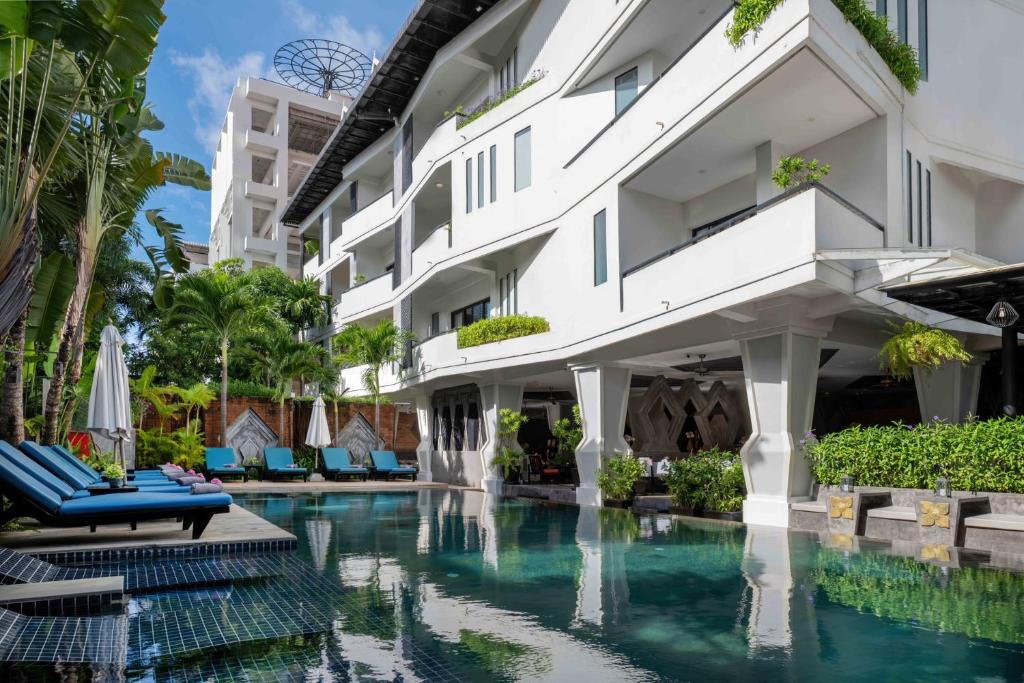
Siem Reap visitors are value-conscious couples and solo travellers (daily budget US$60–100). These three hotels reflect the visitor profile — high review scores, genuine service, and rates that leave budget for temple passes and meals. All 3 are centrally located within a 10-minute tuk-tuk of Pub Street. All properties rated 9.5+ on Booking.com with 6,000+ verified reviews as of July 2026.
Old Market · Best Value ⭐ Top Pick
Central Suite Residence
Spacious suites, a saltwater pool, and service that guests routinely call the best in Southeast Asia. 5 min walk to Old Market, Pub Street and the Siem Reap River. Free airport pickup and breakfast included at this price point.
9.86,846 reviewsFrom $43/night
“The staff remembered our names from day one, arranged every tuk-tuk for us, and the pool was heaven after 6 hours of temple-hopping. Unbelievable value.” — Booking.com user, March 2026
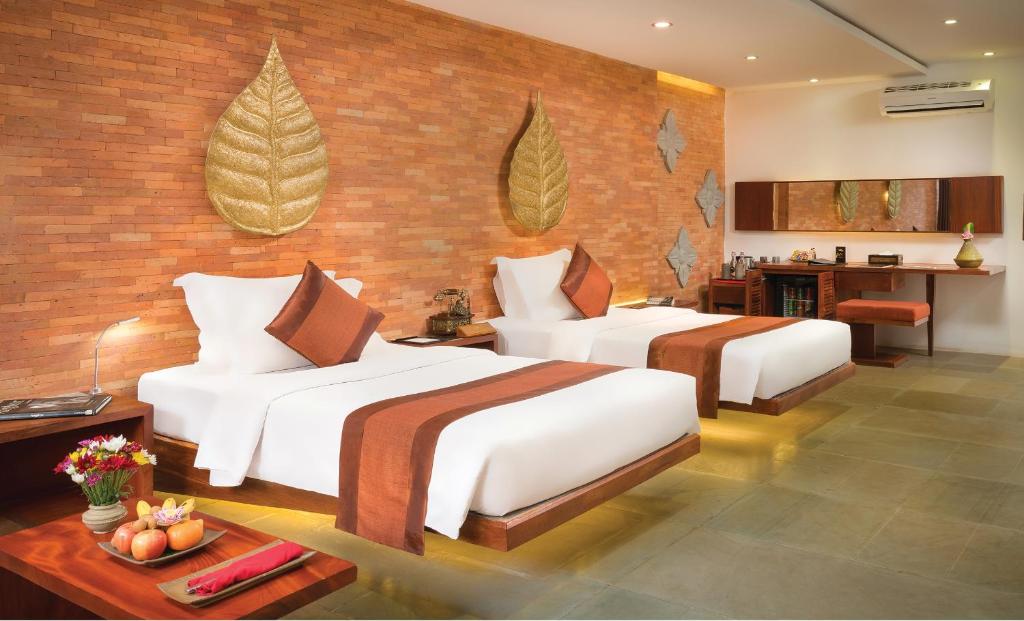
Beautiful Khmer-style boutique hotel with a tropical pool, superb spa, and complimentary welcome massage on arrival. Located in the quieter French Quarter, a 10-minute walk from Pub Street. The in-house restaurant serves exceptional Khmer dishes at reasonable prices.
9.86,550 reviewsFrom $58/night
“The complimentary foot massage after 30 hours of travel was the most welcome gesture I’ve ever had at a hotel. The pool and the breakfast spread outdid hotels at twice the price.” — Booking.com user, January 2026
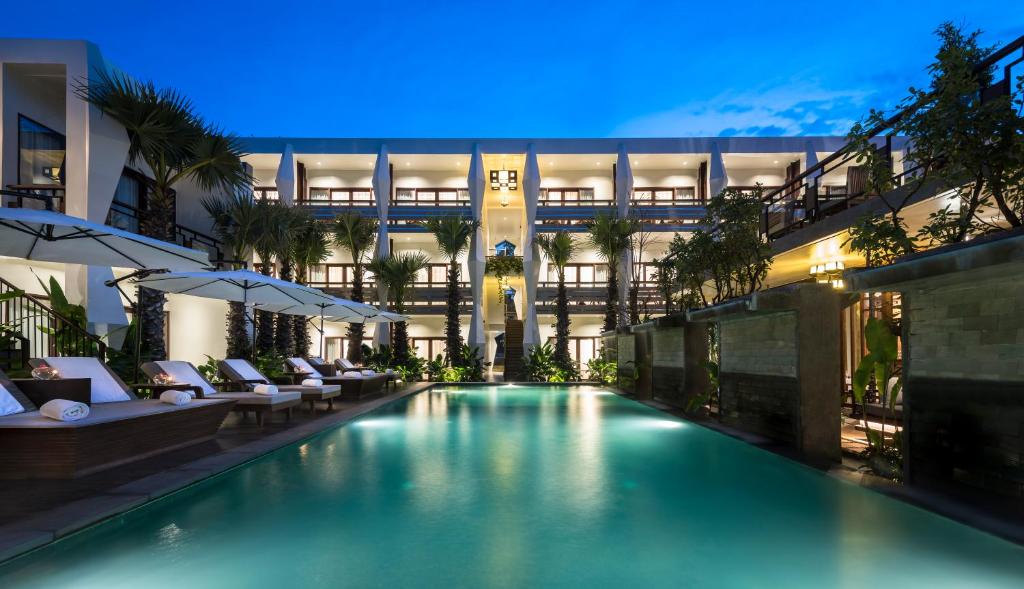
Intimate, eco-conscious riverside boutique with two pools, beautifully landscaped tropical gardens, personalized butler service, a complimentary minibar, and complimentary spa treatments. Near Angkor National Museum. The standout choice for a honeymoon or special-occasion Siem Reap trip.
9.96,389 reviewsFrom $200+/night
“Staying here made our 10th anniversary trip. The pool at dawn with the birdsong, the completely silent gardens two blocks from the buzz of Siem Reap — it is pure magic.” — Booking.com user, February 2026
ℹHotel links above are Booking.com affiliate partner links. They do not affect our selection or ratings, and cost you nothing extra. Full affiliate disclosure →
Frequently Asked Questions
Do I need a guide for Angkor Wat, or can I explore on my own?
No guide is needed — temples are well-signed with English info boards, and tuk-tuk drivers know the routes. A licensed guide (US$25–40/day) adds rich historical depth and helps navigate efficiently, especially for first-timers. A good compromise: hire a guide for Day 1 to learn the history and get oriented, then self-explore Days 2–3. Book through your hotel or the Cambodia Tourist Guide Association for vetted quality.
Is Siem Reap safe for tourists?
Yes — Siem Reap is one of the safest tourist destinations in Southeast Asia. Temple areas are secure with regular patrols. Violent crime against tourists is extremely rare. The main annoyances are persistent souvenir vendors and children selling postcards at temple entrances — a polite but firm “no thank you” works. Siem Reap town centre is walkable and well-lit around Pub Street and the Old Market area. Tuk-tuks are safe and readily available at all hours.
How much should I budget per day in Siem Reap?
Budget traveller: US$35–50/day (hostel, street food US$1–3, shared tuk-tuk, 3-day pass at US$21/day). Mid-range: US$60–100/day (boutique hotel US$40–80, restaurant meals US$5–10, private tuk-tuk US$15–20, one nice dinner US$15–25). The Angkor Pass is the single biggest expense at US$62 for 3 days. An excellent Khmer meal runs US$3–7; a fine-dining dinner US$15–30. Beer is US$0.50–1.
What is the best time of year to visit Siem Reap?
November–February: peak season — dry, pleasant 25–28°C, clear skies for sunrise. Book hotels 1–2 months ahead. March–May: hot season — 35–40°C, dusty. The midday heat break is essential. Fewer crowds and lower hotel prices. June–October: rainy season — greenest landscapes, dramatically fewer tourists, temples almost empty. Afternoon showers typically last 1–2 hours. The moats and reflection pools are full. Sunrise at Angkor Wat is still possible year-round.
How do I get from Siem Reap Airport to the city centre?
The new Siem Reap–Angkor International Airport (SAI) is 45–50 km east of town. Official shuttle bus: US$8–9, ~60 min. Private taxi from the airport transport desk: US$35 (sedan) or US$45 (minivan), 45–60 min. Grab ride-hailing: US$25–35. Pre-book a hotel transfer (US$25–35) for the smoothest arrival — your driver meets you with a sign. The old Siem Reap airport (REP) is permanently closed. The airport transport desk is on the ground floor — turn left as you exit the arrivals hall.
📊 Research Sources & Methodology
Data sources: Itinerary logic informed by 5,800+ verified TripAdvisor and Google Maps reviews (minimum 4.0/5.0 threshold, 500+ reviews per attraction). Hotel data from Booking.com (minimum 9.5/10 score, 6,000+ reviews) as of July 2026. Angkor Pass pricing from Angkor Enterprise official website (angkorenterprise.gov.vn), verified July 2026. Cambodia eVisa information from the Ministry of Foreign Affairs (evisa.gov.kh), verified July 2026. Transport costs verified against Siem Reap driver association rates and Grab Cambodia pricing data, July 2026.
Affiliate disclosure: Hotel links are Booking.com affiliate partner links. This does not affect our hotel rankings. Full disclosure →
Last verified: 2026-07-12. Angkor Pass pricing, visa requirements and transport costs are subject to change. Verify with official sources before travel.
✎
Information out of date? We update within 48 hours of verified corrections. Submit a correction →