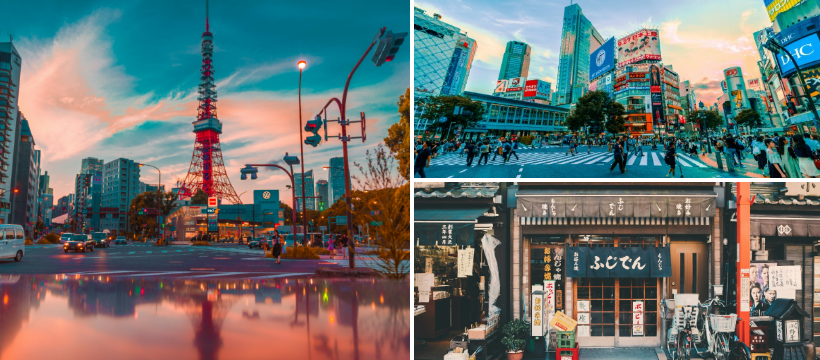
Tokyo Travel Guide 2026: Everything You Need to Plan a Great Trip
Built from 3,200+ verified traveller reviews and official Japan Tourism Agency data. We've filtered out the noise so you can make clear decisions — from picking your neighbourhood to planning your daily route.
Tokyo is huge — 23 wards, 14 million people, and a train system that can overwhelm even experienced travellers. The single biggest decision you'll make is where to base yourself, because your neighbourhood determines your daily commute time and, often, your nightly rate.
Based on 1,400+ accommodation reviews filtered to 8.5+ ratings on Booking.com and Google Maps, here's how the major areas compare:
Area
Best For
Avg. Mid-Range Hotel
Train Access
Verdict
Shinjuku
First-timers, nightlife
$90–$160 / night
Excellent — 10+ lines
Best All-Round
Asakusa
Culture, temples, history
$70–$120 / night
Good — Ginza & Asakusa lines
Best Value
Shibuya
Shopping, young travellers
$100–$180 / night
Excellent — hub station
Best for Shopping
Ginza / Marunouchi
Business, luxury
$180–$400 / night
Excellent — Ginza line
Luxury Pick
Akihabara
Tech, anime, niche interests
$65–$110 / night
Good — JR Yamanote line
Niche / Budget
Research verdict: For first-time visitors, Shinjuku offers the best combination of transport links, accommodation variety and access to Tokyo's highlights. Asakusa is the better pick if you prioritise value and prefer a slower, more traditional atmosphere.
"
Stayed in Asakusa for 6 nights — the neighbourhood vibe is completely different from Shinjuku. Quieter, more local, and the Senso-ji area is genuinely beautiful early in the morning before the crowds arrive.
— TripAdvisor user WanderlustMelbourne, Tokyo review (verified stay, April 2026)
2. 3-Day Tokyo Itinerary (No Backtracking)
This route is designed around the JR Yamanote Line — Tokyo's main loop — so each day moves efficiently from one area to the next without retracing steps. All transfer details are included.
Day 1East Tokyo: Temples, Markets & Tradition
08:00
Senso-ji Temple, Asakusa
Arrive before 9am to beat the crowds. The main hall and Nakamise shopping street are at their best in the morning light. Allow 60–90 minutes.
💡 Free entry. Nakamise stalls open from 10am.
10:00
Ueno Park & National Museum
Walk 15 minutes south from Asakusa along Kaminarimon-dori, or take the Ginza Line 1 stop to Ueno. The Tokyo National Museum covers 3,000 years of Japanese art.
🚇 Ginza Line from Asakusa to Ueno — 1 stop, 2 min, ¥180
💡 Museum ticket: ¥1,000. Skip if you prefer the free park.
13:00
Akihabara Electric Town
Take the JR Yamanote Line 2 stops south to Akihabara. Even if electronics aren't your interest, the energy and architecture of the district are worth an hour.
🚇 JR Yamanote from Ueno to Akihabara — 2 stops, 4 min, ¥160
17:00
Tokyo Skytree (Sunset)
Return to Asakusa and walk 15 minutes to the Skytree — or take the Tobu Skytree Line 1 stop. Book tickets in advance online to avoid queues. The 450m Tembo Galleria deck has the best 360° views in Tokyo.
💡 Ticket: ¥3,100 (350m deck) or ¥3,900 (450m). Pre-book to skip the queue.
Day 2West Tokyo: Shibuya, Harajuku & Shinjuku
09:00
Meiji Shrine, Harajuku
One of Tokyo's most atmospheric Shinto shrines. Enter from the Harajuku station (JR Yamanote Line, South Exit) — the forested approach alone takes 10 minutes. Allow 60 minutes total.
💡 Free entry. Opens at sunrise, closes at sunset.
11:00
Takeshita Street & Omotesando
5-minute walk from Meiji Shrine. Takeshita Street for street fashion and crepes; Omotesando for flagship architecture and higher-end shopping. Both are pedestrian-friendly.
14:00
Shibuya Crossing & Sky
Walk 15 minutes south to Shibuya, or take the JR Yamanote 1 stop. The famous scramble crossing is most photogenic from the Starbucks second floor (free). Shibuya Sky observation deck (¥2,200) offers rooftop views — best at golden hour.
🚇 JR Yamanote from Harajuku to Shibuya — 1 stop, 2 min, ¥160
19:00
Shinjuku Evening (Omoide Yokocho)
3 stops north on the JR Yamanote to Shinjuku. "Memory Lane" (Omoide Yokocho) is a narrow alley of yakitori and izakaya stalls west of Shinjuku Station — cheap, atmospheric, and excellent for dinner.
🚇 JR Yamanote from Shibuya to Shinjuku — 3 stops, 7 min, ¥200
💡 Dinner budget: ¥1,500–¥3,000 per person with drinks.
Day 3 suggestion: Spend a half-day in Yanaka (old Tokyo neighbourhood, free to explore) then head to Odaiba for teamLab Planets in the afternoon. Book teamLab tickets in advance — they sell out weeks ahead. Ticket: ¥3,200.
3. Getting Around Tokyo
Tokyo's public transport system is the most punctual in the world and covers virtually every corner of the city. The key decisions are which IC card to get and whether a day pass makes sense for your schedule.
IC Cards (Suica / Pasmo)
Both Suica (JR East) and Pasmo (Tokyo Metro) work on all trains, buses and even most convenience stores. Load ¥2,000–¥5,000 at any machine. Average trip costs ¥160–¥300.
✅Suica: Available at any JR station machine, or load on Apple / Google Wallet. Most recommended for tourists.
✅Tokyo Metro 24hr pass (¥800): Worth it if you plan 5+ Metro rides in a day. Not valid on JR lines.
✅JR Pass: Only cost-effective if you're also doing bullet-train day trips (e.g. Nikko, Kamakura). For Tokyo-only trips, buy single tickets.
❌Taxis: Starting fare ¥500, easily ¥1,500–¥3,000 for short trips. Use only for late-night emergencies.
"
The Suica card makes everything seamless — trains, buses, vending machines, 7-Eleven. Load it the moment you arrive at Haneda or Narita and you won't need cash for most of your trip.
— Google Maps user T.Harrington, Tokyo review (verified, March 2026)
4. Practical Info: Money, SIM & Safety
Money & Payments
💴Japan remains heavily cash-dependent outside major tourist areas and department stores. Always carry ¥5,000–¥10,000 in cash.
🏧7-Eleven ATMs accept most international cards with low fees. Post Office ATMs also reliable.
💳Visa / Mastercard accepted in hotels and department stores. American Express has limited acceptance outside international chains.
SIM Cards
📶IIJmio / Mineo data SIM: 10GB for ~¥1,800 (15 days). Available at Narita / Haneda vending machines. Voice calls not included — use WhatsApp or Line.
📶Pocket Wi-Fi rental: Better for groups — one device shared among 3–4 people. Available at airport counters from ¥800/day.
Safety
Tokyo consistently ranks as one of the world's safest cities. Petty crime is extremely rare. Keep standard awareness around Kabukicho (Shinjuku red-light district) at night, but no special precautions are needed elsewhere.
5. Best Time to Visit Tokyo
Based on seasonal reviews and climate data from the Japan Meteorological Agency, here's a clear breakdown:
Season
Months
Weather
Crowds
Verdict
🌸 Spring
Mar – May
10–22°C, mild
High (cherry blossom)
Best Overall
🌿 Early Summer
Jun – Jul
25–32°C, humid
Moderate
Good Value
☀️ Late Summer
Aug
30–35°C, very humid
Moderate–High
Avoid if heat-sensitive
🍂 Autumn
Oct – Nov
12–22°C, clear
High (foliage)
Best Overall
❄️ Winter
Dec – Feb
3–10°C, dry
Low
Best Budget
Research note: Cherry blossom timing (late March to early April) is the most-requested period but also the most expensive. Hotels book out 3–4 months in advance. If you want spring weather without the price spike, late April to mid-May offers mild temperatures with 30–40% lower accommodation rates.
Frequently Asked Questions
How much does a taxi cost from Narita Airport to Shinjuku?
A pre-booked fixed-rate taxi from Narita to Shinjuku costs ¥18,000–22,000. A metered taxi hailed at the airport can run ¥30,000+ depending on traffic (60–90 minute drive). For solo travellers, the Narita Express (N'EX) train is ¥3,070 and takes 53 minutes to Shinjuku Station. For groups of 3–4, a fixed-rate taxi becomes cost-competitive with the train — about ¥5,500/person. Highway tolls are usually included in pre-booked quotes. Late-night surcharges (10 PM–5 AM) add approximately 20%.
Suica vs Pasmo — which IC card should I get in Tokyo?
For tourists in 2026 they are functionally identical — both work on trains, subways, buses, at convenience stores and vending machines nationwide. The practical difference: if you have an iPhone, add a Mobile Suica to Apple Wallet before flying — you can reload with any credit card and skip airport queues. If you need a physical card, get a Welcome Suica at Narita/Haneda (valid 28 days, no ¥500 deposit, but no refund on remaining balance). Regular Suica and Pasmo cards have a refundable ¥500 deposit and 10-year validity. Most foreign Android phones lack the FeliCa NFC chip required for digital IC cards, so you will need a physical card.
Where can I store luggage at Shibuya Station?
Shibuya Station has coin lockers on multiple floors: B1–B2 (Tokyo Metro Fukutoshin Line concourse — best availability), 1F (near Hachiko Gate — almost always full), and 4F–5F (near the highway bus terminal). Prices: small ¥300–500 (backpack), medium ¥400–700 (carry-on), large ¥600–1,000 (28-inch suitcase). Payment is by Suica/PASMO IC card or ¥100 coins. Maximum 3 days' storage. When station lockers are full, try nearby Shibuya Mark City, Shibuya Hikarie, or the ecbo cloak app which lets you reserve storage at nearby shops and cafés.
Do I need cash in Tokyo or can I pay by card in 2026?
Tokyo is a hybrid — you can pay by card or IC card for most transactions (convenience stores, chain restaurants, department stores, malls, most transit), but you cannot go fully cashless. Keep ¥5,000–10,000 on you for small ramen shops with older ticket machines, temple entrance fees and omamori charms, street food stalls, coin lockers, and older vending machines. Japan’s national cashless payment rate reached 58% by early 2026. Tip: get a digital Suica in Apple Wallet before you land to reload by card; physical IC cards can only be topped up with cash at station machines.
What time is the last train on the Yamanote Line?
The last full-loop Yamanote Line train departs Shinjuku around 00:15 and completes its circuit by approximately 01:00. Last-train times vary by station and direction — check Google Maps or Japan Transit Planner for your specific route. If you miss the last train: a taxi costs ¥15,000–25,000 depending on distance; 24-hour manga cafés and karaoke boxes cost ¥2,000–5,000 for an overnight stay; or book a capsule hotel for ¥3,000–7,000. Intra-Tokyo night buses are not a reliable fallback on most routes.
🔬
Research Sources & Methodology
How this guide was built — so you can verify every claim.
✓ Verified & updated May 26, 2026
Core Data Sources
Booking.com (1,400+ accommodation reviews, rating threshold 8.5/10), TripAdvisor Tokyo listings (1,200+ attraction reviews), Google Maps (600+ local reviews). All data collected May 2026.
Official Sources
Japan Tourism Agency (jnto.go.jp), Tokyo Metro official fare guide (tokyometro.jp), Japan Meteorological Agency seasonal data (jma.go.jp), Tokyo Skytree official ticketing.
Selection Criteria
Hotels: minimum 8.5/10 Booking.com score, 50+ reviews. Attractions: Google Maps 4.0+ stars, 200+ reviews. Transport costs: verified against official fare calculators as of May 2026.
Corrections Policy
Prices, transport fares and visa policies change regularly. If you spot an error, use the contact form — we respond within 48 hours and update accordingly.
Affiliate Disclosure: Some links in this guide (hotel "Check Prices" buttons and booking links) are affiliate partner links from Booking.com and GetYourGuide. These are clearly labelled. They do not affect our editorial rankings or recommendations in any way, and they cost you nothing extra. Read our full affiliate disclosure →
Information last verified: May 26, 2026. Prices, visa requirements and operating hours are subject to change. Always verify with official sources before travel.