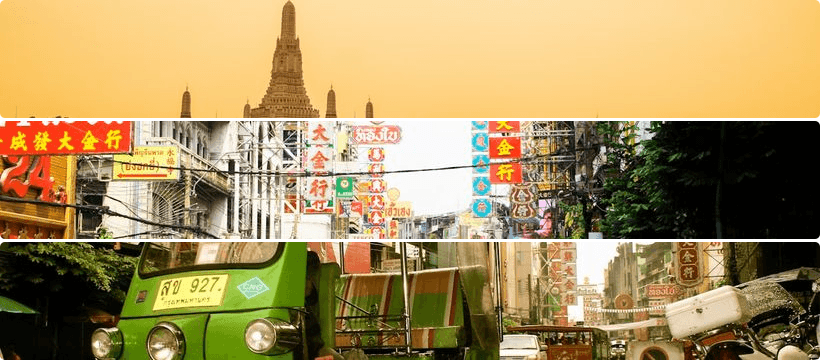
1. Which Neighbourhood to Stay In
Bangkok is a city of districts, each with a completely different character. Where you base yourself determines your daily commute time, your budget, and the type of trip you'll have. Based on 1,200+ accommodation reviews filtered to 8.5+ ratings on Booking.com and Google Maps, here's how the major areas compare:
| Area |
Best For |
Avg. Mid-Range Hotel |
BTS / MRT Access |
Verdict |
| Sukhumvit |
First-timers, shopping, nightlife |
$50–$120 / night |
Excellent — BTS Asok / Nana |
Best All-Round |
| Silom / Sathorn |
Business travellers, bar scene |
$45–$110 / night |
Good — BTS Sala Daeng / MRT Silom |
Best for Nightlife |
| Old City (Rattanakosin) |
Temple-seekers, budget travellers |
$25–$70 / night |
Limited — rely on tuk-tuks & river |
Best Value |
| Riverside / Yaowarat |
Luxury hotels, Chinatown food scene |
$35–$160 / night |
MRT Hua Lamphong / river boat |
Luxury + Food |
| Ari / Victory Monument |
Long-stay, local neighbourhood feel |
$30–$75 / night |
Good — BTS Ari / Victory Monument |
Local Pick |
Research verdict: For first-time visitors, Sukhumvit (particularly between Asok and Phrom Phong BTS stations) offers the best balance of transport links, dining variety, and accommodation quality. Old City is the smarter pick if temples are your priority and you want to save ฿300–600 per night.
"
Staying on the BTS line completely changed my Bangkok experience. No sweating through traffic jams — just hop on at Asok and you're at Siam in 5 minutes. I'd never stay off the Skytrain again.
— TripAdvisor user BackpackingBerlin, Bangkok review (verified stay, February 2026)
2. 3-Day Bangkok Itinerary (Temples to Rooftops)
This route is designed around Bangkok's river and BTS Skytrain so you move efficiently between zones without backtracking. Day 1 covers the Old City on foot and by river boat. Days 2–3 use the BTS. All fares and logistics are included.
Grand Palace & Wat Phra Kaew
Arrive by 8am to beat the heat and the tour groups. The Grand Palace complex covers 218,000 sq m — allow 2 hours minimum. Dress code strictly enforced: shoulders and knees covered. Sarong rentals available at the gate.
💡 Entry: ฿500. Closed on Buddhist holidays — check calendar before visiting.
Wat Pho (Temple of the Reclining Buddha)
A 5-minute walk south from the Grand Palace. The reclining Buddha is 46 metres long and covered in gold leaf. The temple complex is also Bangkok's oldest traditional massage school — a 30-minute foot massage here (฿420) is one of the best-value experiences in the city.
💡 Entry: ฿200. Combine with the Grand Palace for the most efficient morning.
Chao Phraya River Boat to Wat Arun
Take the cross-river ferry from Tha Tien pier (฿4) to Wat Arun — the Temple of Dawn. Best viewed from across the river at sunset, but the 70-metre prang (tower) is climbable. The river views from the upper terraces are the best free panorama in Bangkok.
⛵ Cross-river ferry from Tha Tien to Wat Arun — 2 min, ฿4
💡 Entry: ฿100. The climb is steep — wear shoes, not sandals.
Khao San Road & Dinner at Roti Mataba
Walk 15 minutes north to Khao San Road for the evening atmosphere. Avoid the overpriced tourist restaurants on the main strip — Roti Mataba on Phra Athit Road (300m west) serves excellent Muslim-Thai food at street prices. Try the mussaman curry (฿130).
💡 Budget dinner ฿120–200. Khao San bars open late — easy to extend the evening.
Chao Phraya Express Boat to ICONSIAM
Board the Chao Phraya Express Boat at any central pier (Saphan Taksin BTS interchange is most convenient). Ride south 3 stops to ICONSIAM — a river-view mall worth entering for the floating market in the basement (no entry fee), the city views, and the best AC in Bangkok.
⛵ Orange flag express from Saphan Taksin to ICONSIAM — 15 min, ฿15
Yaowarat (Chinatown) — Afternoon Food Crawl
Take the MRT to Hua Lamphong then walk 10 minutes to Yaowarat Road. Bangkok's Chinatown is best explored by walking and eating. Key stops: Nai Ek Roll Noodles (฿60), T&K Seafood for crab fried rice (฿250), and fresh durian from any street vendor.
🚇 MRT Blue Line from Saphan Taksin area to Hua Lamphong — ฿17–28
💡 Yaowarat comes alive after 18:00 — plan to stay for dinner.
Rooftop Bar (Octave or Sky Bar)
End the evening at a rooftop bar. Octave at Marriott Sukhumvit 57 (BTS Thong Lo) has a rotating 360° bar on the 49th floor — minimum spend ฿400, cocktails ฿350–500. Sky Bar at Lebua State Tower is more famous (from the film "The Hangover Part II") but significantly more expensive (฿700+ drinks).
🚈 BTS from Hua Lamphong area to Thong Lo (Octave) via transfer at Asok — ฿44
💡 Smart dress required at Sky Bar. Octave is more relaxed.
Chatuchak Weekend Market (Sat/Sun only)
The world's largest weekend market — 15,000 stalls across 35 acres. Arrive early (7–9am) before the heat becomes unbearable. Sections 2–4 for antiques, sections 24–26 for clothing, section 7 for plants. Budget ฿200–500 for food and snacks. Take the BTS to Mo Chit or MRT to Chatuchak Park.
🚇 BTS Skytrain to Mo Chit — ฿59 max fare from Sukhumvit
💡 Weekdays: visit nearby Or Tor Kor fresh market (free, open daily) instead.
Siam Square & MBK Center
Bangkok's shopping heart. MBK (BTS National Stadium) is 8 floors of electronics, clothes and street food at market prices — good for phone accessories and tailors. Siam Paragon and CentralWorld next door are upmarket malls with international brands. The BTS interchange at Siam connects all lines.
🚈 BTS from Mo Chit to Siam — direct, 20 min, ฿59
Asiatique The Riverfront
A riverside night market on the banks of the Chao Phraya — 1,500 boutiques, restaurants and a Ferris wheel. Not cheap by Bangkok standards, but excellent for an atmospheric final evening. Take the BTS to Saphan Taksin and board the free shuttle boat (every 30 min from 16:00).
🚈 BTS to Saphan Taksin → free shuttle boat to Asiatique — 10 min
💡 Opens at 17:00. Best atmosphere 19:00–22:00. Cabaret shows available (฿1,200+).
Day 4 extension: Add a day trip to Ayutthaya — 80km north, 1.5hr by train from Hua Lamphong (฿20–50). The ancient capital has 13+ temple complexes and is UNESCO-listed. Hire a bicycle on arrival (฿50/day) to cover the main sites without a tour group.
3. Getting Around Bangkok
Bangkok has three overlapping transit systems, a river boat network, and Grab (ride-hailing). Understanding which to use — and when — saves significant time and money. The key rule: stay on the BTS Skytrain whenever possible, and use Grab for journeys the rail doesn't cover.
BTS Skytrain (Rabbit Card)
The BTS covers most tourist areas in two lines: Sukhumvit Line (east-west) and Silom Line (running through the business district). A Rabbit Card (฿100 deposit, loadable in ฿100+ increments) gives discounted fares and works on the bus network.
✅
BTS Rabbit Card: Grab at any BTS station on arrival. Minimum top-up ฿100. Single trips range ฿17–59 depending on distance.
✅
MRT Blue Line: Connects Chatuchak, Hua Lamphong (trains north), and Silom interchange. Buy single journey tickets or use a stored-value card (separate from Rabbit).
✅
Airport Rail Link: Connects Suvarnabhumi Airport to Phaya Thai BTS in 26 minutes (฿45). Far faster than a taxi at peak hours. Runs 06:00–24:00.
✅
Chao Phraya Express Boat: Orange flag routes stop at major piers including Saphan Taksin (BTS interchange), Tha Tien (Grand Palace) and Phra Arthit (Khao San area). ฿15 flat fare.
⚠️
Tuk-tuks: Scenic but overpriced. Never agree to a "sightseeing tour" offer from a tuk-tuk driver near tourist sites — these routinely involve gem shop stops. Use for very short journeys only; always agree on price before boarding.
❌
Metered taxis: Cheap but slow in traffic. Legal requirement: always insist the meter is running ("meter, please"). Starting fare ฿35.
"
The Rabbit Card is a must. Load ฿500, and it covers 3–4 days of BTS travel. Skip the tuk-tuks unless you just want a photo — Grab is cheaper, air-conditioned, and doesn't try to take you to a gem shop.
— Google Maps user S.Kowalczyk, Bangkok transit review (verified, January 2026)
4. Practical Info: Money, SIM & Safety
Money & Payments
💵
Thailand is increasingly card-friendly in malls and hotels, but street food, temples, tuk-tuks and markets are cash only. Carry ฿500–1,000 at all times.
🏧
ATMs charge a ฿220 foreign transaction fee per withdrawal — withdraw large amounts less frequently. Kasikorn Bank (KBank) and Bangkok Bank ATMs are most reliable for international cards.
💱
Currency exchange: SuperRich (orange logo, not green) consistently offers the best THB rates in Bangkok. Avoid airport exchange booths — their rates are typically 5–8% worse.
💳
Visa and Mastercard accepted at major hotels, department stores and mid-range restaurants. Contactless payments growing but not universal outside BTS stations and malls.
SIM Cards
📶
AIS, DTAC or True Move tourist SIMs: Available at Suvarnabhumi Airport arrivals hall and any 7-Eleven. 15GB for 7 days from ฿299. AIS has the strongest overall coverage.
📶
Recommended: AIS Traveller SIM — 30-day, unlimited data at ฿599. Available at the counter before immigration at Suvarnabhumi. Voice calls included.
Safety
Bangkok is generally very safe for tourists. Petty theft (bag snatching on motorbikes, pickpocketing on Khao San Road) is the primary risk — use a cross-body bag and keep phones in pockets in crowded areas. The main scam to know: the "Grand Palace is closed today" approach, where a friendly stranger redirects you to a gem shop. The Grand Palace is almost never closed to tourists.
🌡️
Heat: Bangkok averages 32–35°C year-round. Carry water, schedule outdoor sightseeing before 11am, and use the BTS sky bridges to move between buildings without going outside.
🏥
Medical: Bumrungrad International Hospital (Sukhumvit Soi 3) and Bangkok Hospital are internationally accredited. English-speaking staff, fast service, private-hospital costs. Travel insurance strongly recommended.
5. Best Time to Visit Bangkok
Based on seasonal traveller review patterns and climate data from the Thai Meteorological Department, here is a clear breakdown. Bangkok has no "bad" season — only trade-offs between weather, crowds, and cost.
| Season |
Months |
Weather |
Crowds |
Verdict |
| ❄️ Cool & Dry |
Nov – Feb |
25–32°C, low humidity |
High (peak season) |
Best Overall |
| 🌸 Hot Season |
Mar – May |
33–38°C, very hot |
Moderate |
Good Value |
| 🌧️ Rainy Season |
Jun – Oct |
28–34°C, heavy showers |
Low |
Cheapest Rates |
| 🎉 Songkran |
Apr 13–15 |
35–38°C |
Very High |
Thai New Year — unmissable water festival |
Practical note on rainy season: Bangkok rain typically falls as heavy afternoon downpours lasting 30–90 minutes, not all-day drizzle. The BTS sky bridges and mall networks mean you can often avoid getting wet entirely. Hotel rates drop 20–40% in the rainy season — a reasonable trade-off for experienced travellers.
Frequently Asked Questions
How much should a taxi cost from Suvarnabhumi Airport to Khao San Road?
An official metered taxi from Suvarnabhumi Airport (BKK) to Khao San Road costs 300–500 THB (US$9–15) total. Breakdown: metered fare ~170–300 THB + mandatory 50 THB airport surcharge + optional expressway tolls ~45–75 THB. Journey time is 45–60 minutes, longer during peak traffic. Always use the official taxi queue on Level 1 (Arrivals) — take a ticket from the kiosk, go to your assigned bay, and tell the driver “Khao San Road, meter please.” If a driver refuses the meter, walk away and get another. Avoid touts inside the terminal offering flat-rate “taxis” at inflated prices.
Is Bangkok safe for solo female travellers?
Yes — Bangkok is one of the safest major cities in Southeast Asia for solo women, scoring 4.1/5 on solo female safety indices. Catcalling and street harassment are genuinely rare. The real risks are
tourist scams (tuk-tuk overcharging, the “temple is closed” diversion), pickpocketing in crowded markets like Chatuchak, and drink spiking in nightlife areas. Use the
Grab ride-hailing app instead of street taxis, stay in well-lit areas like Sukhumvit or Silom, and avoid the Nana/Patpong red-light districts alone at night. The Tourist Police number is
1155 (English-speaking, 24/7). For neighbourhood-by-neighbourhood safety details, see our
Bangkok destination guide.
What should I wear when visiting the Grand Palace?
The Grand Palace enforces a strict dress code: shoulders must be fully covered (no tank tops or sleeveless shirts — scarves draped over bare shoulders are not accepted), knees must be covered (long trousers or long skirts), and closed-toe shoes are expected. Ripped jeans, leggings, and see-through clothing are prohibited. Sarong rental is available near the entrance (30–50 THB), but queues can be long. Ticket: 500 THB (includes Wat Phra Kaew and the Queen Sirikit Museum). Hours: 8:30 AM–3:30 PM daily. Beware of the classic scam — if someone outside the palace tells you it is “closed,” ignore them and buy tickets at the official counter inside.
Can you drink the tap water in Bangkok?
No — tap water is not recommended for drinking in Bangkok. While the Metropolitan Waterworks Authority treats water to WHO standards at the plant, the aging pipe network and poorly maintained building storage tanks introduce contaminants by the time it reaches your tap. Almost nobody in Bangkok — locals or expats — drinks directly from the tap. Use bottled water (10–14 THB for 1.5L at 7-Eleven), or use hotel filtered water stations. Tap water is fine for brushing teeth and showering. Factory-made ice with a cylindrical shape and hole in the centre is generally safe; crushed ice from street stalls is best avoided.
How much is a Thai massage in Bangkok and how do you avoid the dodgy ones?
Legitimate Thai massage prices in 2026: local shopfronts 250–400 THB/hour, mid-range chains like Health Land 650 THB/2 hours, premium spas 1,200–2,000+ THB/hour. Wat Pho temple — the birthplace of Thai massage — charges 420 THB/hour and is reliably authentic. To avoid dodgy shops: look for well-lit open-front shops with foot massage chairs visible from the street, Google Maps ratings of 4.3–4.7 with Thai-language reviews, and “No Sex” signs at the register. Known safe chains: Health Land, Let’s Relax, Asia Herb Association. Stay away from shops in Soi Cowboy, Nana, and Patpong, and any place where staff aggressively beckon from the doorway. Normal tip is 50–100 THB/hour — if anyone suggests 1,000+ THB tips before you even start, leave.