1. Where to Stay in Siem Reap
Siem Reap is compact — most travellers stay within a 2 km radius of the Old Market (Phsar Chas) and Pub Street area. Unlike Bangkok or Hanoi, the town doesn't have sharply defined neighbourhoods; instead, the choice comes down to how close you want to be to the nightlife and whether you prioritise a pool and quiet garden over walking distance to bars. Based on 900+ accommodation reviews filtered to 8.5+ ratings on Booking.com and Google Maps:
| Area |
Best For |
Avg. Mid-Range Hotel |
Getting Around |
Verdict |
| Old Market / Pub Street |
Nightlife, restaurants, central access |
$25 – $70 / night |
Walk to dining & markets; tuk-tuk for temples |
Best for First-Timers |
| Wat Bo Area |
Quieter, emerging restaurant scene |
$30 – $80 / night |
10–15 min walk to Old Market |
Best for Foodies |
| Riverside / Treang Village |
Boutique hotels, peaceful gardens |
$40 – $200 / night |
Short tuk-tuk to centre |
Boutique & Luxury |
| Sangkat Sla Kram |
Budget guesthouses, local feel |
$10 – $35 / night |
Tuk-tuk essential (15 min to centre) |
Best Value |
Research verdict: For most visitors, the Old Market / Wat Bo corridor offers the best balance — walking distance to the town's best restaurants and markets, with temple access via a hired tuk-tuk driver (most hotels can arrange one for $15–20/day). Riverside boutique hotels are worth the premium if you want a pool and garden to retreat to after dusty temple days — the extra calm makes a real difference in the tropical heat.
Top-Rated Hotels (Verified 2026)
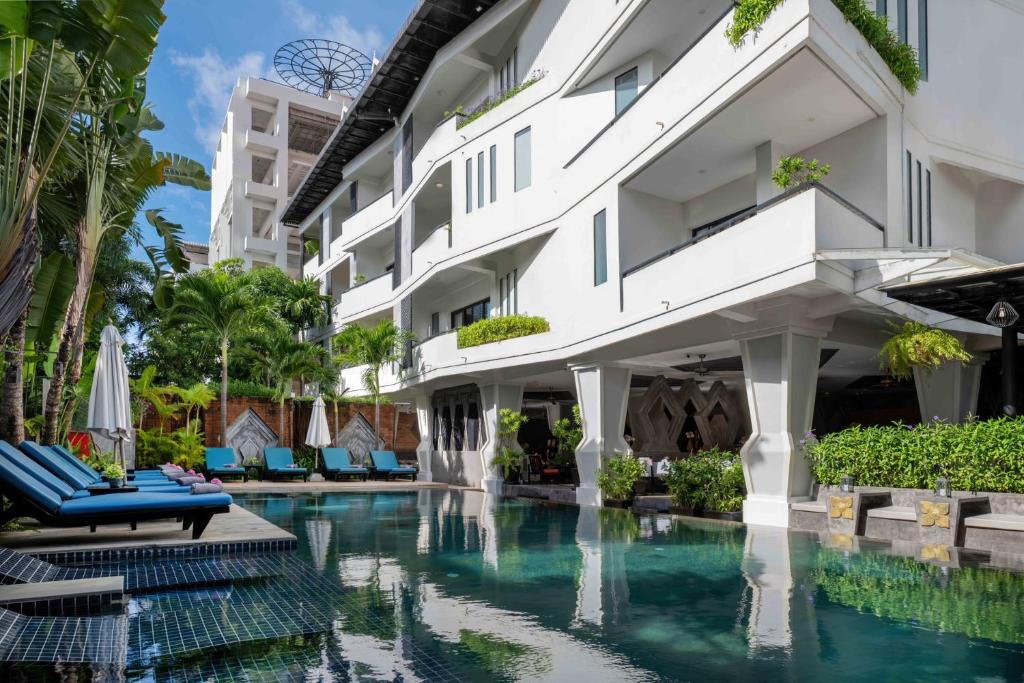
Central Suite Residence
Old Market area · 2 min walk to Pub Street
★★★★★
9.8
(6,846 reviews)
From $43 / night
Check Prices on Booking.com →
Top Value Pick — spacious suites, saltwater pool, exceptional staff
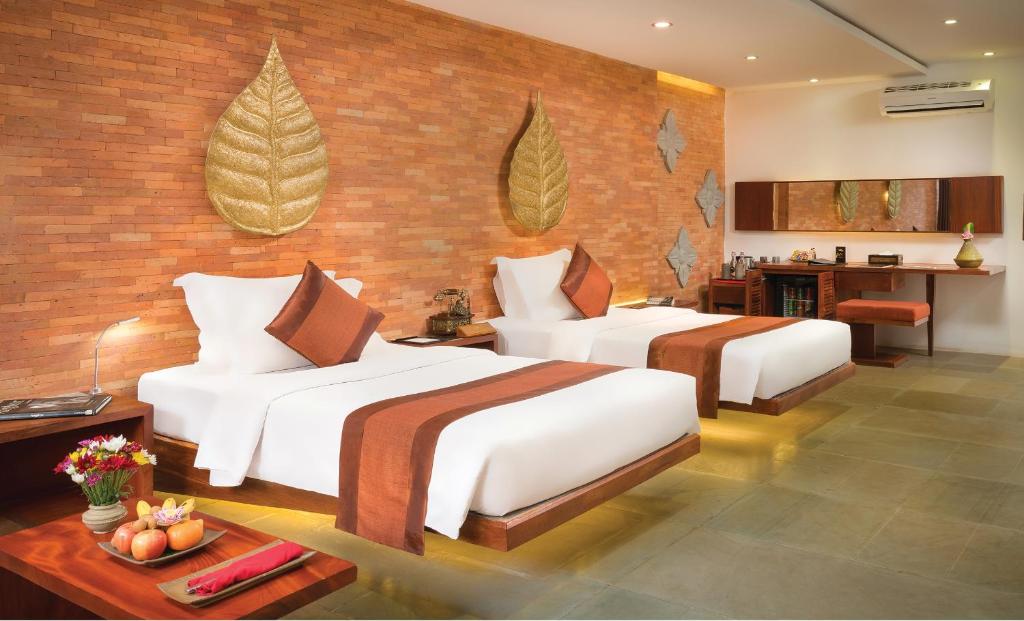
Golden Temple Residence
Old Market area · central location
★★★★★
9.8
(6,550 reviews)
From $58 / night
Check Prices on Booking.com →
Top Pick — Khmer-style boutique, pool, complimentary arrival massage
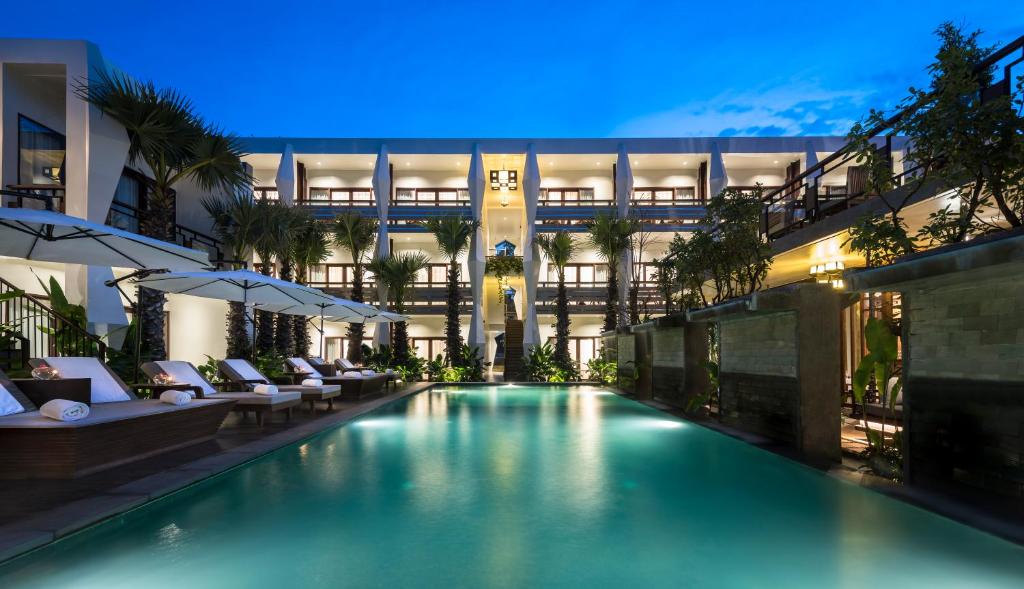
Jaya House River Park
Riverside · Treang Village
★★★★★
9.9
(6,389 reviews)
From $200+ / night
Check Prices on Booking.com →
Splurge Pick — eco-conscious riverside boutique, two pools, butler service
"
The hotels in Siem Reap are absurdly good value. At $50/night you're getting a pool, a breakfast spread, and staff who remember your name and your tuk-tuk schedule by day two. After dusty temple days, coming back to a saltwater pool and a $6 massage is about as good as travel gets.
— TripAdvisor user WanderlostKiwi, Siem Reap review (verified stay, January 2026)
2. Angkor Pass & Temple Entry — How It Works
The Angkor Archaeological Park sprawls across 400 km² and contains over 1,000 temples. Access to the entire park is controlled by a single ticket system — the Angkor Pass — managed by Angkor Enterprise. Understanding how this works before you arrive saves money and avoids the most common temple-planning mistake.
| Pass Type |
Price (USD) |
Validity |
Best For |
| 1-Day Pass |
$37 |
Single calendar day |
Tight schedule — hit the big three in one day |
| 3-Day Pass |
$62 |
Any 3 days within 10 days |
Most Popular — covers the classic route with rest days |
| 7-Day Pass |
$72 |
Any 7 days within 30 days |
Deep exploration — outer temples, Koh Ker, Kulen Mountain |
Where to Buy
Tickets are available through four channels. The official online portal at angkorenterprise.gov.kh lets you buy in advance and skip the ticket office queue. The Angkor Enterprise mobile app works the same way. The main ticket counter at Road 60 (Apsara Road) is open 5:00 AM – 5:30 PM daily and accepts cash (USD and KHR) plus credit cards. Self-service kiosks at the same location are fastest — scan your passport, pay by card, and receive your printed pass with photo in under two minutes.
Critical tip — buy the evening before: If you buy your pass after 4:45 PM at the Road 60 counter, it is valid from that evening for sunset entry — which means your 3-day pass effectively gives you sunset on day 0 plus three full temple days. Head straight to Phnom Bakheng temple hill for sunset (the climb takes 20 minutes; the temple platform caps visitors at 300, so arrive by 4:30 PM to secure a spot). This is the single most common advice repeated across 3,800+ Siem Reap reviews.
Temple Dress Code
The Angkor Park dress code is strictly enforced at all temple entrances. Shoulders must be covered (no tank tops or sleeveless tops — a scarf draped over bare shoulders is not accepted). Knees must be covered (long trousers, long skirts, or knee-length shorts — no short shorts or miniskirts). The rules apply to both men and women, and guards at Angkor Wat and Banteay Srei are particularly vigilant. Sarong rentals are available near the main temple entrances ($1–2), but it is easier to dress appropriately from the start. Lightweight long trousers and a cotton shirt or modest top are practical in the heat and keep the sun off your skin.
🎫
Pass is non-transferable — your photo is printed on the pass and cross-checked by guards at every major temple entrance. Don't lose it; replacement costs the full price again.
👶
Children under 12: Free entry (passport or ID may be requested for age verification).
🕔
Sunrise entry: Gates open at 5:00 AM. The ticket counter opens at 5:00 AM for same-day purchases — queues for sunrise can be 20–30 minutes, another reason to buy the evening before.
3. 3-Day Temple Route
This is the classic Angkor circuit that balances the absolute must-sees with breathing room. Each day is organised around a tuk-tuk route ($15/day for the small circuit, $20–25 for the grand circuit; car/van $50–70/day recommended for Day 3). Start early — temple temperatures rise quickly after 10:00 AM, and the crowds thin out significantly before 8:30 AM.
Angkor Wat — Sunrise at the Reflection Pools
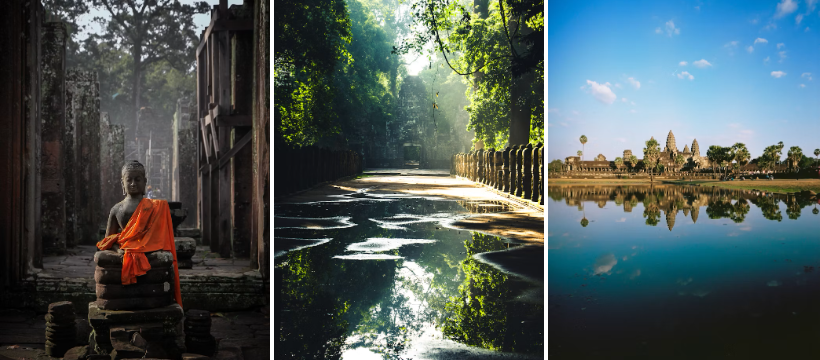
Depart your hotel by 4:45 AM. Your tuk-tuk driver will take you directly to the Angkor Wat entrance — aim to be at the north reflection pool by 5:15 AM to claim a front-row spot. The silhouette of the five towers emerging from darkness as the sky shifts from indigo to orange is the defining image of Cambodia. The reflection pool on the left (north) side is the classic photography position — the right pool tends to have lotus plants blocking the reflection depending on the season. After sunrise, explore the temple itself: the outer gallery bas-reliefs (the Churning of the Ocean of Milk on the east gallery is the highlight), the central sanctuary, and the upper terrace.
💡 Hotels pack a breakfast box on request. Eat by the reflection pool after sunrise — avoid the overpriced food stalls outside the temple.
Angkor Thom & Bayon — The 216 Faces
A 10-minute tuk-tuk ride north from Angkor Wat brings you to Angkor Thom, the last capital of the Khmer Empire. Enter through the South Gate — the stone causeway lined with 54 gods and 54 demons pulling the serpent Naga is the most dramatic temple approach in Southeast Asia. Inside the walled city, Bayon temple is the centrepiece: 54 towers carved with 216 enormous stone faces, each gazing in four directions. The faces are believed to depict either the bodhisattva Avalokiteshvara or King Jayavarman VII himself — probably both. The "Khmer Smile" you see on tourist brochures is one of these faces.
💡 The upper terrace is narrow and can feel crowded. Go to the outer gallery first — fewer people, and the face-in-profile compositions are more photogenic from the lower level.
Ta Prohm — The Tomb Raider Temple
A 10-minute drive east brings you to Ta Prohm, the temple most visitors remember most vividly. Unlike Angkor Wat (restored) and Bayon (partially restored), Ta Prohm has been deliberately left in its jungle-ravaged state — giant strangler fig and silk-cotton trees grow through the stone walls and roofs, their roots cascading down like frozen waterfalls. The effect is surreal and unmistakably photogenic. This is the temple featured in the 2001 film Tomb Raider, and the association has made it the second most-visited temple in the park.
💡 The crowds peak 10:00 AM–2:00 PM. Visiting after 2:00 PM (post-lunch lull) significantly reduces the pressure at the main tree-root photo spots.
Phnom Bakheng — Sunset Over Angkor Wat
A 65-metre hill with a 10th-century temple on top, Phnom Bakheng offers the classic sunset view over Angkor Wat in the distance — on a clear day you can see the five towers of Angkor Wat silhouetted against the setting sun, with the Tonlé Sap lake glinting on the horizon. The climb takes 15–20 minutes on foot (or a $15 elephant ride, ethically questionable and not recommended). Important: the temple platform has a strict 300-visitor capacity enforced by numbered passes handed out at the base.
💡 Arrive by 4:30 PM to secure a pass. The walk down after sunset is dark — bring a phone flashlight or headlamp.
Preah Khan — The Sacred Sword
A sprawling 12th-century monastic complex built by Jayavarman VII — less crowded than Ta Prohm but equally atmospheric, with trees growing through walls in the outer corridors. Preah Khan was a functioning city within Angkor Thom's walls, housing over 1,000 teachers in its time. The two-storey pavilion supported by cylindrical columns (unique in Khmer architecture) and the Hall of Dancers with its carved apsara friezes are the highlights. The temple is large and labyrinthine — allow 90 minutes and expect to get happily lost.
🛺 Tuk-tuk from Siem Reap centre: 25 min. Part of the standard Grand Circuit route ($20/day).
💡 Visit before 9:00 AM — the temple faces east and is at its most photogenic in morning light. Far fewer visitors than Ta Prohm.
Ta Som — The Gate Eaten by a Tree
A compact, intimate temple 3 km east of Preah Khan. Ta Som's defining image is the east gate completely enveloped by a giant strangler fig — the tree has grown through and around the stone gopura (entrance pavilion), creating one of the most photogenic tree-temple compositions in the park. Smaller than Ta Prohm, quieter, and easier to navigate in 30–45 minutes.
💡 The east gate is the photo — walk straight through the temple to the far end. The tree-framed face tower at the exit is best photographed from outside the gate looking back in.
Neak Pean — The Island Temple
Unlike any other Angkorian temple, Neak Pean sits on a small circular island in the middle of the Jayatataka baray (ancient reservoir). The temple was designed as a symbolic hospital — four ponds connected to the central sanctuary represented the four elements, and pilgrims bathed in the waters for healing. You walk across a wooden causeway over the reservoir to reach the island. A 30-minute visit is sufficient, and the setting — surrounded by water and trees — is the most peaceful moment of the Grand Circuit.
Pre Rup — Sunset Pyramid
A 10th-century brick temple-mountain built as the state temple of King Rajendravarman II. Pre Rup's three-tiered pyramid structure means you can climb to the top platform for open views across the surrounding forest and rice fields — a quieter sunset alternative to Phnom Bakheng with no visitor cap. The warm orange brick glows intensely in late-afternoon light, and the view from the top tier across the treetops is the best panorama on the Grand Circuit.
💡 Pre Rup has no visitor limit and is far less crowded than Phnom Bakheng. Arrive by 4:30 PM for a good sunset position on the upper terrace.
Option A: Banteay Srei — The Citadel of Women
Located 38 km northeast of Siem Reap (45–60 min by car), Banteay Srei is unlike every other Angkorian temple. Built from pink sandstone and carved with an extraordinary level of detail — the relief work here is the finest in the Khmer world, with intricate floral patterns, mythological scenes from the Ramayana, and delicate apsara figures. The temple is small (you can walk the entire site in 45–60 minutes), but every surface rewards close inspection. The name "Citadel of Women" comes from the belief that the carvings are too fine to have been made by male hands.
🚗 Car/van essential — 38 km each way. Tuk-tuk possible but slow and dusty (90 min each way). Hire a car with driver: $50–70/day.
💡 Entry included in Angkor Pass. Visit before 9:00 AM for the best light on the pink sandstone and to avoid the tour bus crowds that arrive from 9:30 AM. Combine with the Cambodia Landmine Museum (on the same road, $5 entry, a sobering and important stop).
Afternoon: Choose Your Adventure
Route A — Tonlé Sap Lake & Floating Village: Southeast Asia's largest freshwater lake, 15 km south of Siem Reap. The floating village of Kampong Khleang (further but more authentic) or Chong Kneas (closer but more touristy) offers a window into a completely amphibious way of life — entire communities living on stilted houses and boats that rise and fall 8–10 metres with the seasonal water level. Route B — Beng Mealea Jungle Temple: A 12th-century temple 65 km east of Siem Reap, still largely consumed by jungle. Beng Mealea is roughly the same footprint as Angkor Wat but completely unrestored — you climb over fallen stone blocks and through dark corridors with trees growing from the walls. The Indiana Jones atmosphere is genuine. Requires a separate $5 entry ticket (not covered by the Angkor Pass).
🚗 Car/van recommended for both options. Tonlé Sap: 30 min from Siem Reap. Beng Mealea: 90 min each way — combine with Banteay Srei for a full-day outer temple route.
💡 Tonlé Sap: go in the wet season (Aug–Feb) when water levels are high and the floating village is fully afloat. In the dry season (Mar–Jul) the water recedes and the village sits on mud — significantly less impressive.
Evening: Phare Cambodian Circus
Phare is not an elephant-and-trick circus — it is a social enterprise performing arts school that trains disadvantaged Cambodian youth in acrobatics, theatre, music and visual arts. The nightly show combines high-energy contemporary circus with Cambodian storytelling (Khmer folklore, modern social themes) and has been consistently rated 4.7+ on Google Maps from 7,000+ reviews. It is the single best cultural experience in Siem Reap after the temples themselves.
💡 Tickets: $18–38 depending on seat section. Book at least one day ahead via the Phare website. Shows run nightly at 8:00 PM — arrive 30 min early for pre-show entertainment. The open-air big top has fans but no AC.
5+ day extension: With more time, add Koh Ker (a 10th-century pyramid temple 120 km northeast, $15 separate entry, far fewer visitors than Angkor), a countryside bicycle tour through the rice paddies south of Siem Reap ($15–25 half-day guided), and a half-day Cambodian cooking class ($15–25 per person, book via your hotel or Klook).
4. Getting Around Siem Reap
Siem Reap has no public bus system or metro. Getting around means tuk-tuks (for everything), Grab (the Southeast Asian ride-hailing app), rented bicycles or e-bikes, and private cars for longer temple journeys. Here is how each option works in practice.
Tuk-Tuks — Your Temple Transport
✅
Temple circuits: A full-day tuk-tuk hire costs $15–20 for the Small Circuit temples (Angkor Wat, Bayon, Ta Prohm), $20–25 for the Grand Circuit (Preah Khan, Ta Som, Neak Pean, Pre Rup). Your driver waits at each temple — agree on the itinerary and price before departing. Most hotels can arrange a reliable driver.
✅
In-town trips: Short tuk-tuk rides within central Siem Reap cost $2–4 depending on distance. Pub Street to Wat Bo: $2. Old Market to Riverside hotels: $3–4. Agree on the price before getting in — there are no meters.
✅
Airport tuk-tuk: $15–20 from Siem Reap Angkor International Airport (SAI) to the city centre. At 45–50 km, this is a long ride in an open vehicle — a private taxi ($35) is far more comfortable after a flight.
⚠️
Finding a good driver: The relationship with your tuk-tuk driver matters — a good one knows the temple timings, the quiet entrances, and where to find cold water and shade. Ask your hotel for a recommendation, or look for drivers with laminated recommendation letters from previous travellers (a common and genuinely useful practice in Siem Reap). Tip $3–5 per day if the service is good.
Cars, Grab & Other Options
✅
Private car/van: $50–70/day including driver and fuel. Recommended for Banteay Srei (38 km), Beng Mealea (65 km), and Koh Ker (120 km) — the distances, heat and road dust make a tuk-tuk impractical for outer temples. Air conditioning transforms the experience on long temple days.
✅
Grab: Available in Siem Reap. GrabCar within the city: $3–6. Grab from airport: $25–35. Fixed pricing in the app removes negotiation — useful if you do not have a regular driver.
✅
Bicycle rental: $3–8/day from shops around the Old Market. The Small Circuit temples are reachable by bike (Angkor Wat is 6 km from town, flat roads), but the heat limits how pleasant this is. E-bikes ($10–15/day) make the circuit far more manageable.
"
Book the same tuk-tuk driver for all three days. By day two they know when you want water, which temple entrance is quietest, and exactly when to have the cold towels ready. Our driver, Mr. Sopheap, charged $45 total for three days and it was the best money we spent in Cambodia.
— Google Maps user M.Henderson_London, Siem Reap transport review (verified, December 2025)
5. Practical Info: Money, Visa & Safety
Money & Payments
💵
US dollars are the de facto currency in Siem Reap. Hotels, restaurants, tuk-tuks, markets and temple passes are all priced in USD and paid in USD. Cambodian Riel (KHR) is used for small change — vendors give change under $1 in Riel at approximately 4,000 KHR to $1. Bring small USD bills ($1, $5, $10) — they are essential for tuk-tuks, street food and market shopping.
💵
Banknote condition matters: Cambodian vendors and money changers routinely reject torn, marked, or excessively worn USD notes. Check the bills you bring from home — crisp, clean notes only. ATMs dispense fresh notes, which is one reason to withdraw locally rather than bringing all your cash.
🏧
ATMs: Widely available in central Siem Reap (ABA Bank, Canadia Bank, ACLEDA). Most ATMs dispense USD (not Riel). Fee: $5–10 per withdrawal regardless of amount — withdraw larger sums less frequently. ABA Bank ATMs typically have the lowest fees and highest withdrawal limits (up to $500 per transaction).
💳
Cards: Accepted at hotels, mid-range and upscale restaurants, supermarkets and the Angkor Pass ticket counter. Not accepted at markets, street food stalls, tuk-tuks, or smaller local shops. Carry $20–40 in cash at all times in small denominations for daily expenses.
Cambodia Visa
🛂
eVisa: $36 via the official portal at evisa.gov.kh. Takes 3 business days. Upload a passport photo and a passport scan, pay by card, receive the eVisa by email. Print a copy — a phone screenshot is not accepted at immigration. Valid at Siem Reap International Airport and major land borders. Check the official website for the current list of eligible land entry points — the eVisa is not accepted at all crossings.
🛂
Visa on Arrival: $30 (cash only, USD preferred). Available at Siem Reap International Airport and most international border crossings. Bring one passport-sized photo. The queue for Visa on Arrival at Siem Reap airport can be 20–40 minutes during peak arrival times (midday). Paying in USD speeds things up — having exact change helps.
📋
Requirements: Passport valid for at least 6 months beyond your entry date. 30-day tourist visa (single entry, extendable once for an additional 30 days through a travel agent in Siem Reap for approximately $45). Most nationalities including UK, US, EU, Australia, Canada, and ASEAN countries are eligible.
Safety & Health
🛡️
Siem Reap is very safe for tourists. Violent crime against visitors is extremely rare. The main annoyance is persistent souvenir vendors at temples — children and adults selling postcards, guidebooks, scarves and trinkets. A firm but polite "no thank you" (or "awtay awkun" in Khmer) is sufficient. The vendors are persistent but not aggressive.
⚠️
Common annoyances: The "baby milk scam" — a woman asking you to buy expensive powdered milk for her baby (she returns it to the shop for a kickback). Overpriced drinks at temple entrances — bring your own water. Tuk-tuk drivers offering "free" rides in exchange for visiting a shop — politely decline unless you actually want to browse.
🚰
Tap water is NOT drinkable. Bottled water is widely available ($0.50–1 for a 1.5L bottle at minimarts, $1–2 at temple stalls). Most hotels provide complimentary bottled water daily. Refill stations (e.g. RefillNotLandfill) offer filtered water for $1 per refill — bring a reusable bottle to cut plastic waste.
🏥
Medical: Royal Angkor International Hospital has English-speaking staff and is the go-to for tourists. The Siem Reap Provincial Hospital is public and basic. Travel insurance with medical evacuation cover is strongly recommended. Pharmacies (including well-stocked chains like U-Care) are common in central Siem Reap.
🌡️
Heat: Temple days involve hours of walking on exposed stone in direct sun with limited shade. Wear a hat, sunscreen, and lightweight long sleeves (the double benefit of sun protection and temple dress code compliance). Carry at least 2 litres of water per person for a full temple day. Temple fatigue is real — after the third temple, even the most impressive carvings start to blur. Schedule rest days or half-days between temple days.
6. Best Time to Visit Siem Reap
Siem Reap has a tropical climate with three distinct seasons. Based on seasonal traveller review patterns and Cambodian meteorological data:
| Season |
Months |
Weather |
Temple Conditions |
Verdict |
| ❄️ Cool & Dry |
Nov – Feb |
25–28°C, low humidity, clear skies |
Best — comfortable temple exploring, dry paths |
Best Overall |
| ☀️ Hot Season |
Mar – May |
35–40°C, intense sun, dusty |
Challenging — temple walking in full heat, haze affects photos |
Doable with early starts; lower hotel prices |
| 🌧️ Rainy Season |
Jun – Oct |
28–34°C, afternoon showers, high humidity |
Greenest — moats fill with water, temples look lush, fewer tourists |
Best Value |
The rainy season is underrated: Rain typically falls as heavy afternoon downpours lasting 30–90 minutes, not all-day drizzle. Morning temple visits are unaffected. The landscape is dramatically greener — the temple moats fill with water, and the reflection pools at Angkor Wat are at their fullest. Tourist numbers drop 30–50% compared to the peak December–January period, and hotel rates fall 20–40%. If you can tolerate humidity and the possibility of a wet afternoon, June–October offers the best value in Siem Reap.
Key Attractions Beyond the Temples
🏛️
Angkor National Museum: $12 entry. An excellent air-conditioned introduction to Khmer history and Angkorian civilisation — best visited before your first temple day for context. The Gallery of 1,000 Buddhas is a highlight. Allow 2 hours.
🛍️
Old Market (Phsar Chas) & Night Market: The Old Market is the daytime hub for fresh produce, spices, textiles and souvenirs. The adjacent Night Market (opens 5:00 PM) is more tourist-oriented but good for an evening wander — barter politely, aim for 30–50% off the initial asking price.
🧵
Artisans d'Angkor: Free entry. An ethical social enterprise training young Cambodians in traditional silk weaving, stone carving, lacquerware and woodworking. Workshop tours show artisans at work. The on-site boutique sells high-quality, fairly-priced crafts — one of the best places in Siem Reap to buy genuine souvenirs that directly support local livelihoods.
🍜
Wat Bo area dining: The streets around Wat Bo Road have become Siem Reap's emerging restaurant district — Khmer-owned kitchens serving traditional dishes at higher quality than the Pub Street tourist circuit. Try fish amok (Cambodia's national dish — coconut fish curry steamed in banana leaf) and lok lak (stir-fried beef with lime-pepper dipping sauce).
Frequently Asked Questions
How much does a taxi cost from Siem Reap Airport to the city centre?
The new Siem Reap Angkor International Airport (SAI) is located 45–50 km from the city centre — significantly further than the old airport. An airport shuttle bus costs $8–9 per person and takes about 60 minutes. A private taxi costs $35 for a sedan or $45 for a minivan (one-way, 45–60 min). Grab ride-hailing costs $25–35 depending on vehicle type. There is no public bus service to the city. Book airport transport through your hotel — many offer complimentary pickup for stays of 3+ nights. Avoid unlicensed touts at arrivals; use the official taxi counter inside the terminal for fixed-rate taxis.
How much is the Angkor Wat entrance fee in 2026?
The Angkor Pass costs $37 for 1 day, $62 for 3 days (valid any 3 days within a 10-day window), and $72 for 7 days (any 7 days within 30 days). Tickets are available online at angkorenterprise.gov.kh, via the official mobile app, at the Road 60 ticket counter (5:00 AM–5:30 PM daily), or at self-service kiosks. Children under 12 enter free. A key tip repeated in thousands of reviews: buy your pass the evening before your first temple day — it includes free sunset entry that same day at Phnom Bakheng, effectively giving you a bonus half-day.
How many days do you need in Siem Reap?
3 full days is the sweet spot for most travellers — enough to cover the main Angkor temples at a comfortable pace plus the town's food and cultural scene. With 2 days you can see the highlights: Angkor Wat sunrise, Bayon, Ta Prohm, and a sunset at Pre Rup. With 3 days follow the classic temple route — Day 1: Angkor Wat sunrise, Bayon, Ta Prohm, Phnom Bakheng sunset; Day 2: Grand Circuit (Preah Khan, Ta Som, Neak Pean, Pre Rup); Day 3: Banteay Srei (finest stone carvings, 38 km out) plus either Tonlé Sap floating village or Beng Mealea jungle temple. With 5+ days add Koh Ker, Kulen Mountain, a countryside bicycle tour, and a Cambodian cooking class. About 40% of visitors now stay up to 7 days as part of a growing "slow travel" trend in Siem Reap.
Do I need a visa to visit Cambodia?
Yes — most nationalities need a visa, but the process is straightforward. An eVisa costs $36 and takes 3 business days via the official portal at evisa.gov.kh. A Visa on Arrival costs $30 (cash only, USD preferred) and is available at Siem Reap International Airport and most international border crossings. Both give you a 30-day tourist visa (single entry, extendable once for an additional 30 days through a travel agent for approximately $45). You need a passport valid for at least 6 months beyond entry and one passport-sized photo (for Visa on Arrival). Most nationalities — UK, US, EU, Australia, Canada, and all ASEAN countries — are eligible. Apply for the eVisa at least one week before travel to avoid airport queues. Important: the eVisa is not accepted at all land border crossings — check the official website for the current list of eligible entry points before travelling overland.
Cash or card — how should I pay in Siem Reap?
US dollars are the de facto currency in Siem Reap — hotels, restaurants, markets, and tuk-tuk drivers all quote and accept prices in USD. Cambodian Riel (KHR) is used for small change only (under $1) at roughly 4,000 KHR to $1. Bring small USD bills — $1, $5, and $10 notes are essential for tuk-tuks ($2–4 per trip), street food ($2–5 per meal), and market purchases. Vendors routinely reject torn or damaged USD notes — check your bills. Credit cards are accepted at hotels, upscale restaurants, supermarkets, and the Angkor Pass ticket counter, but not at markets, street stalls, or for tuk-tuks. ATMs are widely available (ABA Bank, Canadia) and dispense USD, but charge a $5–10 fee per withdrawal. Bring some USD cash with you rather than relying entirely on ATMs to avoid repeated withdrawal fees.