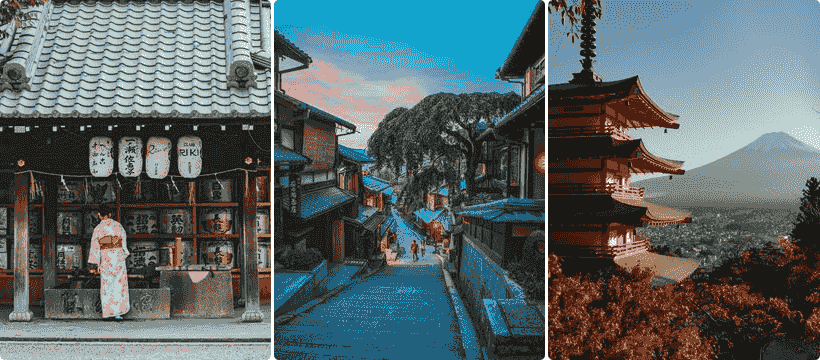
1. Which District to Stay In
Kyoto is a mid-sized city and surprisingly navigable — most major temples and districts are within 30 minutes of a central base. Where you stay determines whether you spend money on buses and taxis or can walk to your first temple of the day. Based on 700+ accommodation reviews filtered to 8.5+ ratings on Booking.com and Google Maps, here is how the key areas compare:
| District |
Best For |
Avg. Mid-Range Hotel |
Access |
Verdict |
| Higashiyama |
Temples, Gion, traditional streets |
$90–$200 / night |
Walk to Kiyomizudera, Gion |
Best Location |
| Gion / Shijo |
Geisha district atmosphere, nightlife |
$80–$180 / night |
Walk to Pontocho, Nishiki Market |
Best All-Round |
| Kyoto Station |
Budget, transit convenience, day trips |
$60–$130 / night |
Bus / subway to everywhere |
Best Value |
| Arashiyama |
Bamboo grove, river, rural atmosphere |
$90–$250 / night |
Far from east Kyoto — plan accordingly |
Best for Peace |
Research verdict: The Gion / Shijo area offers the best overall balance — walking distance to Nishiki Market, Pontocho Lane, Gion's geisha streets and the Higashiyama temple trail. Higashiyama itself is quieter and more atmospheric but commands a premium. Kyoto Station is the smart pick for travellers doing multiple day trips to Nara, Osaka and Hiroshima.
"
Staying in Higashiyama meant I could be at Kiyomizudera by 7:30am before the tour buses arrived. The light through the maple trees, no crowds, the wooden stage completely clear — it was completely different to what I'd seen in photos. That hour alone was worth the hotel premium.
— TripAdvisor user K.Tanaka_Berlin, Kyoto review (verified stay, April 2026)
2. 3-Day Kyoto Itinerary
Kyoto rewards early risers. The difference between visiting Fushimi Inari at 06:30 and 10:00 is night and day — literally and figuratively. This itinerary is structured around early starts to reach the major sites before tour groups, then slower afternoons in less-visited areas. All transport details and entry prices are included.
Fushimi Inari Taisha
The 10,000 vermilion torii gates winding up Mount Inari are Kyoto's most photographed sight — and one of Japan's most visited shrines. The key is timing: arrive at first light (06:00–07:30) and the lower gates are almost empty. The full hike to the summit takes 2–2.5 hours. Even hiking halfway (Yotsutsuji intersection, ~45 min) gives spectacular views back over Kyoto. Entry is free and the site is open 24 hours.
🚃 JR Nara Line from Kyoto Station to Inari Station — 5 min, ¥150. Walk 2 min to shrine entrance.
💡 Free entry, open 24/7. Come before 08:00 for near-empty gates. After 10:00 it is extremely crowded.
Kiyomizudera Temple
The "Pure Water Temple" on the eastern mountain is Kyoto's most iconic structure — a UNESCO World Heritage site whose wooden stage extends 13 metres over the hillside with no nails. The approach via Sannen-zaka and Ninen-zaka stone lanes (lined with traditional craft shops and tea houses) is as impressive as the temple itself. Allow 2 hours for the lanes and temple complex.
🚌 Bus 207 from Tofukuji Station to Kiyomizumichi — 15 min, ¥230
💡 Entry: ¥500. Evening illuminations (Mar, Aug, Nov) are exceptional — check dates in advance and book early.
Higashiyama Temple Walk: Kodaiji to Yasaka Shrine
A 2km walking route connecting Kodaiji Temple (¥600), the historic Ishibei-koji lane, Chion-in (one of Japan's largest temple gates, free) and Yasaka Shrine at the end of Shijo Avenue (free, open 24/7). This is the most concentrated stretch of traditional Kyoto architecture — mossy stone walls, machiya townhouses and lantern-lined paths.
💡 Evening is equally beautiful — Yasaka Shrine is illuminated until late and the lanes empty out after sunset.
Gion District & Pontocho for Dinner
Walk north from Yasaka Shrine into Gion's Hanamikoji Street — the narrow lane of ochaya (teahouse) facades where maiko and geiko (apprentice and full geisha) can occasionally be seen walking to evening engagements between 17:30 and 19:00. Pontocho, a pedestrian alley parallel to the Kamo River, is lined with restaurants offering kaiseki from ¥3,000 and izakayas from ¥1,500.
💡 Photography etiquette: do not approach, block or photograph geiko without permission. Many have started avoiding the district due to harassment.
Arashiyama Bamboo Grove
The towering bamboo corridor that defines Arashiyama is best experienced before 09:00 — after which tour groups make it genuinely difficult to move. The grove itself takes about 15 minutes to walk through; the surrounding area (Tenryuji Garden, the riverside, Jojakoji Temple's forested hillside) rewards a full morning.
🚃 Sagano Line from Kyoto Station to Saga-Arashiyama — 16 min, ¥250
💡 The bamboo grove is free. Tenryuji garden: ¥500 (garden only) or ¥800 (including zen rock garden). The back garden approach through the grove entrance costs ¥300 extra but is worth it.
Jojakoji Temple & Okochi Sanso Garden
Hidden above the bamboo grove, Jojakoji is one of Kyoto's most atmospheric temple settings — moss-covered stone steps winding up through maple and cedar trees. Okochi Sanso (¥1,000, includes matcha tea) is the villa and garden of a silent-film actor, with panoramic views over Kyoto. Both see a fraction of Tenryuji's visitor numbers.
💡 These two back-to-back give you 2 hours in relative solitude while the bamboo grove fills up below.
Nijo Castle
The UNESCO-listed shogun's palace in central Kyoto features the "nightingale floors" — corridors engineered to squeak under any foot to detect intruders, still intact and audible today. The Ninomaru Palace interior (not removable shoes required) is one of the finest examples of Edo-period decorative art in Japan.
🚃 Sagano Line back to Kyoto Station, then Toza Subway Line to Nijojo-mae — 25 min total, ¥400
💡 Entry: ¥800 (castle) + ¥100 (palace interior). Closed Tuesdays and select periods in Jan/Jul. Buy tickets at the gate — no advance booking needed.
Nishiki Market
Kyoto's "kitchen" — a 400-metre covered shopping street with over 100 stalls selling pickled vegetables, tofu, fresh dashi, street food and high-end kitchen knives. Best visited late afternoon when the morning rush subsides. Try dashimaki tamago (rolled omelette, ¥350), matcha soft-serve (¥400) and yuba (tofu skin) on a skewer (¥200–350).
💡 Most stalls close by 18:00. The market is free to browse. Come with appetite — it is impossible to walk through without eating.
Kinkakuji (Golden Pavilion)
The three-storey Zen temple covered in gold leaf, reflected in a mirror pond — Japan's most visited attraction. Arrive at opening (09:00) to avoid the worst crowds. The visit is entirely one-way and takes about 40 minutes. Photography from the main viewpoint is spectacular on any weather — morning mist in particular makes for extraordinary conditions.
🚌 Bus 101 or 205 from Kyoto Station to Kinkakuji-michi — 40 min, ¥230
💡 Entry: ¥500. No interior access. Buy the entry ticket — it doubles as a paper charm, a rare souvenir.
Ryoanji Temple — Zen Rock Garden
A 10-minute walk from Kinkakuji, Ryoanji houses Japan's most famous karesansui (dry rock garden) — 15 stones in white gravel arranged so that only 14 are visible from any single viewpoint. The meaning remains formally unexplained. The surrounding pond garden is equally meditative and far less crowded than the rock garden viewing corridor.
💡 Entry: ¥600. Come immediately after Kinkakuji opens as both share the same peak visitor window. Arrive before 11:00 for a quiet 10 minutes at the garden.
Philosopher's Path (Tetsugaku-no-michi)
A 2km stone canal path connecting Ginkakuji (Silver Pavilion) to Nanzenji Temple, named after philosopher Nishida Kitaro who walked it daily. The route passes small cafés, shrine gates and quiet moss gardens. It is one of Kyoto's most pleasant walks at any season — spectacular under cherry blossoms in late March / early April and maple foliage in November.
🚌 Bus 204 from Ryoanji-mae to Ginkakuji-michi — 30 min, ¥230. Walk south.
💡 Ginkakuji entry: ¥500. Nanzenji: free (aqueduct and grounds). The 2km walk takes 45 min at a leisurely pace.
Nanzenji Temple & Suirokaku Aqueduct
Nanzenji's Sanmon gate (¥600, ascendable for rooftop views) is one of Japan's most impressive structures. Behind the main hall sits the Suirokaku — a Meiji-era red-brick aqueduct that carries canal water through the temple grounds, an incongruous but photogenic piece of industrial history amid the traditional architecture.
💡 The aqueduct is free to walk under. Most visitors arrive from the Philosopher's Path so early evening sees the crowds thinning significantly.
Day 4 extension — Nara day trip: JR trains from Kyoto Station reach Nara in 45 minutes (¥720). The Nara Park deer, Todaiji's 15-metre bronze Buddha (entry ¥600) and the quiet Kasuga Taisha shrine lanes combine to make Nara one of Japan's most rewarding half-day trips. Most accessible from the Kyoto Station base.
3. Getting Around Kyoto
Kyoto has an excellent public transport network covering every major temple area, operated through a combination of city buses, subway lines and private railways. The key decision is whether to use a day pass or individual fares — the answer depends entirely on how many sites you plan to visit.
IC Cards & Bus/Subway Passes
✅
IC Card (ICOCA / Suica / Pasmo): Works on all Kyoto buses (¥230 flat fare), both subway lines and JR local trains. Load ¥2,000–3,000 at any station machine. Best for flexible, mixed-mode days.
✅
Kyoto City Bus & Subway 1-Day Pass (¥1,100): Worth it if you take 5+ bus or subway trips. Covers the city network including the popular 100/101/205 bus routes serving Kinkakuji, Ginkakuji and Nishiki Market.
✅
JR Pass (existing holders): Covers the JR Nara Line (Fushimi Inari in 5 min), JR Sagano Line (Arashiyama in 16 min) and Shinkansen connections to Osaka and Tokyo. Not worth buying solely for Kyoto — buy single JR tickets instead.
⚠️
Bicycle rental: Kyoto is largely flat and very cycle-friendly. Bikes available from ¥800–1,200/day near Kyoto Station. Excellent for the Philosopher's Path and quieter temple areas. Not recommended for central Gion (narrow lanes, tour groups).
❌
Taxis: Expensive and frequently caught in temple district traffic. Use for airport transfers or late-night returns only. Fare from Kyoto Station to Kinkakuji: ~¥1,400. App-based services (GO, S.RIDE) give fixed-price estimates.
Key Bus Routes
The Kyoto city bus network is the backbone of temple touring. The three most useful routes for visitors: Bus 205 (Kyoto Station → Nishiki → Gion → Heian Shrine loop), Bus 101 and 205 (Kyoto Station → Kinkakuji → Nishiki), Bus 207 (Higashiyama temples: Kiyomizudera, Gion, Heian). All buses cost ¥230 flat fare; exact change or IC card preferred.
"
The bus day pass is genuinely good value in Kyoto. I did Kinkakuji, Ryoanji, the Philosopher's Path and Nanzenji in one day using only buses. Total transport cost: ¥1,100 instead of ¥1,380 in individual fares — and the convenience of just tapping on without counting coins is worth the difference.
— Google Maps user M.Schreiber, Kyoto transport review (verified, March 2026)
4. Practical Info: Money, SIM & Crowds
Money & Payments
💵
Temple entry fees, street food, bus fares and smaller restaurants are cash only. Always carry ¥3,000–5,000. Convenience stores (7-Eleven, FamilyMart, Lawson) have reliable ATMs accepting international cards with modest fees.
🏧
7-Eleven ATMs: Most reliable for international cards in Japan — Visa, Mastercard, UnionPay, Maestro. Fee: ~¥110 per withdrawal. Available 24/7 at every convenience store.
💳
Larger hotels, department stores (Isetan, Takashimaya) and restaurants accept Visa and Mastercard. Contactless payments (Apple Pay, Google Pay) increasingly accepted at mid-range restaurants and chains.
📦
Coin lockers: Available at Kyoto Station (¥400–800/day) and most major temples. Essential for day-trippers arriving from Tokyo or Osaka — store luggage and explore hands-free.
SIM Cards
📶
IIJmio or Mineo data SIM: 10GB for ~¥1,800 (15 days). Available at Narita / Haneda vending machines and major electronics stores (Yodobashi, BIC Camera). Insert and use immediately — no registration required for tourist SIMs.
📶
Pocket Wi-Fi rental: Available at airport counters. Useful for groups sharing a connection. Daily rate: ¥400–800. Return in a postbox before departing Japan.
Managing Crowds
Kyoto sees 50 million visitors annually. Crowd management is the most important practical consideration, especially during cherry blossom season (late March to mid-April) and autumn foliage (mid-November). During peak periods, popular sites like Kiyomizudera and Fushimi Inari can receive 10,000+ visitors per day.
⏰
Arrive before 08:00: Every major Kyoto temple has an early-morning window (06:00–09:00) when visitor numbers are a fraction of the afternoon peak. This is the single most effective crowd-management strategy.
🗓️
Avoid weekends: Weekday visits are significantly less crowded. If your schedule allows, shift temple visits to Tuesday–Thursday.
🗺️
Alternate sites: For every famous temple, there is a nearby lesser-visited equivalent with similar beauty. Jojakoji (vs. Arashiyama bamboo), Fushimi Momoyama (vs. Fushimi Inari), Shoren-in (vs. Kiyomizudera) — all within 20 minutes of their famous counterparts.
5. Best Time to Visit Kyoto
Kyoto has one of Japan's most extreme visitor seasonality patterns. Based on Kyoto Tourism Bureau data and seasonal review patterns across 1,980+ reviews, here is a clear breakdown:
| Season |
Months |
Highlight |
Crowds |
Verdict |
| 🌸 Cherry Blossom |
Late Mar – Mid Apr |
Sakura on every temple path |
Very High — book months ahead |
Most Beautiful |
| 🍂 Autumn Foliage |
Mid Nov – Early Dec |
Maple and ginkgo illuminations |
High — book 4–6 weeks ahead |
Most Atmospheric |
| ☀️ Early Summer |
May – Jun |
Fresh greenery, no peak crowds |
Moderate |
Best Value |
| ❄️ Winter |
Dec – Feb |
Snow on golden pavilion (rare but stunning) |
Low |
Cheapest Rates |
| 🔥 Mid-Summer |
Jul – Aug |
Gion Matsuri festival (July) |
High + 35°C+ |
Only for Gion Matsuri specifically |
Booking note for peak seasons: During cherry blossom and autumn foliage periods, mid-range hotels in central Kyoto and Higashiyama sell out 3–6 months in advance. Book accommodation before buying flights. Prices increase 40–80% compared to shoulder season. If you miss the booking window, Osaka (30 min by Shinkansen) has significantly more hotel availability and lower prices — feasible as a base for Kyoto day trips.
Frequently Asked Questions
How much is the Haruka Express from Kansai Airport to Kyoto?
The JR Haruka Express from Kansai Airport (KIX) to Kyoto Station takes 70–80 minutes. Standard fare: ¥3,060 (non-reserved) or ¥3,590 (reserved). Foreign tourists can buy the discounted Haruka 1-Way Ticket for ¥2,200 — saving about ¥860–1,390. Available as a QR e-ticket online or at the JR Ticket Office at Kansai Airport Station (2nd floor). The Haruka is also fully covered by the JR Nationwide Pass and JR-West Rail Passes. Trains run roughly every 30 minutes; first departure ~6:30 AM, last ~10:16 PM.
Kyoto bus or subway — which transport pass should I get?
The old ¥700 bus-only pass was discontinued and no longer exists. The Subway & Bus 1-Day Pass at ¥1,100 is the best value for most sightseeing days, breaking even at 5+ rides (bus fare is ¥230 per ride). A temple-heavy day — Kyoto Station → Kinkaku-ji → Ryoan-ji → Gion → Fushimi Inari — easily racks up 8–10 rides. For lighter days with just 1–2 sights, skip passes and just tap an IC card. The subway is faster than buses because Kyoto buses get packed and stuck in traffic; combine subway for long distances with short bus or taxi connections.
How many days do you need in Kyoto?
Three full days is the sweet spot for first-time visitors. Day 1: Higashiyama — Kiyomizu-dera, Gion, Yasaka Shrine, Philosopher’s Path. Day 2: Arashiyama — bamboo grove, Tenryu-ji, monkey park, Kinkaku-ji on the way back. Day 3: Fushimi Inari (arrive before 8 AM to beat crowds) + Nara day trip or Uji for matcha. With 2 days you can cover the absolute highlights; with 4+ you can slow down and add day trips. Kyoto rewards early mornings — temples open 6–8 AM and are exponentially quieter before 9 AM.
Do I need to book temples in advance in Kyoto?
Most temples and shrines do not require advance booking — you can walk up, pay at the gate (typically ¥300–600), and enter. The key exceptions: Kinkaku-ji and Ginkaku-ji have timed entry during peak seasons via online reservation; Saiho-ji (Moss Temple) requires advance postal-mail booking (¥3,000+); and some special night illuminations during autumn and cherry blossom season require pre-booked tickets. No booking needed for Fushimi Inari, Kiyomizu-dera, or Nanzen-ji — just arrive early to beat crowds.
Can I use Suica or Pasmo in Kyoto?
Yes — all major IC cards including Suica, Pasmo, ICOCA, and others work interchangeably in Kyoto. Tap them on buses (enter via the rear door, tap on exit at the front), subways, JR trains, and at convenience stores and vending machines. If you are flying into Kansai Airport, buy an ICOCA card at the JR counter (¥2,000: ¥1,500 balance + ¥500 refundable deposit, valid 10 years). The ICOCA & HARUKA discount ticket combo saves about ¥1,000 on the airport express. iPhone users: add Mobile Suica in Apple Wallet before flying — it works throughout Kyoto with no deposit or expiry.