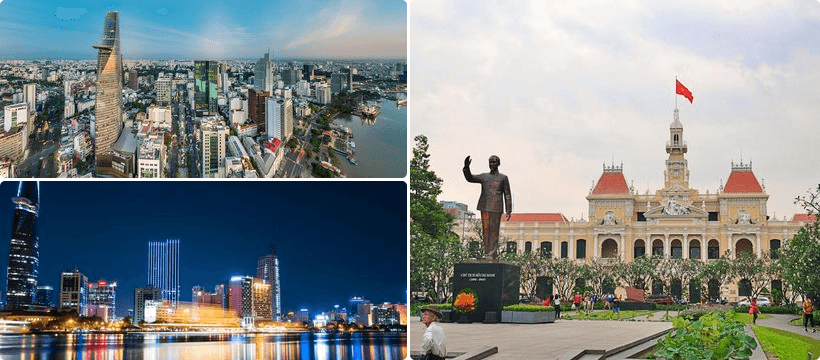
1. Which District to Stay In
Ho Chi Minh City is vast — 19 urban districts spread across 2,061 km². For visitors, the meaningful choice is where within the inner districts to base yourself. District 1 is the undisputed centre of tourist Saigon, but the adjacent districts offer a more local experience with identical Grab access to the main sights. Based on 420+ accommodation reviews filtered to 8.5+ ratings on Booking.com and Google Maps:
| District |
Best For |
Avg. Mid-Range Hotel |
Getting Around |
Verdict |
| District 1 (Dong Khoi) |
Central access, war museums, rooftop bars |
$30–$90 / night |
Walk to most D1 sights; Grab for further |
Best All-Round |
| District 1 (Pham Ngu Lao) |
Budget, backpacker area, street food |
$12–$40 / night |
Walk to Ben Thanh; Grab anywhere |
Best Budget |
| District 3 |
Local cafés, French-era architecture, quieter |
$25–$65 / night |
Grab to D1 in 10 min |
Best Local Feel |
| Binh Thanh / Thu Duc |
Long stays, expat community, lower prices |
$18–$50 / night |
Grab essential — 20–30 min to D1 |
Long-Stay Pick |
Research verdict: District 1's Dong Khoi area (around the Opera House, Reunification Palace and the main rooftop bar strip) is the strongest base for first-time visitors — the War Remnants Museum, Ben Thanh Market and the Saigon River waterfront are all walkable. Pham Ngu Lao (also District 1, 15 min walk west) is the budget traveller hub with the highest density of cheap hotels, travel agencies and street food. District 3 suits those wanting quieter streets and a more residential neighbourhood character.
"
District 1 is overwhelming in the best way. The traffic never stops, the street food is everywhere, the rooftops are spectacular and the history is confronting. I've never been anywhere that packs so much into such a dense area. Grab handles everything outside walking distance — I never needed anything else.
— TripAdvisor user UrbanExplorer_Lisbon, HCMC review (verified stay, February 2026)
2. 3-Day Ho Chi Minh City Itinerary
This itinerary moves between HCMC's distinct zones — war history in the morning (cooler, more contemplative), neighbourhood food and culture in the afternoon, rooftop bars and markets in the evening. Day 3 takes you out of the city to the Mekong Delta or Cu Chi Tunnels. All Grab fares and entry prices are included.
War Remnants Museum
The most visited museum in Vietnam documents the Vietnam War (called the American War in Vietnam) through photographs, military hardware and first-hand accounts. The photographic exhibitions — particularly the third floor covering the effects of Agent Orange and the work of war photographers including Nick Ut (Napalm Girl) — are among the most powerful documentary photography collections anywhere in the world. This is not a comfortable visit, but it is essential for understanding the country's 20th-century history.
🛵 Grab from D1 hotels: ₫25,000–40,000 (~5 min). Walk from Pham Ngu Lao: 15 min.
💡 Entry: ₫40,000. Allow 2 hours minimum — rushing through misses the impact of the photographic collections. The outdoor military equipment exhibition (ground floor) is free to enter without a ticket.
Reunification Palace (Independence Palace)
The former Presidential Palace of South Vietnam — preserved exactly as it was on April 30, 1975, when North Vietnamese tanks crashed through its gates and ended the war. The intact command bunker in the basement (with original 1960s military communications equipment), the rooftop helicopter pad and the ornate reception rooms create an extraordinary time-capsule effect. One of Asia's most significant historical buildings and remarkably under-visited compared to its importance.
🛵 Grab from War Remnants Museum: ₫25,000 (~5 min). Or walk 10 min northeast.
💡 Entry: ₫40,000. Allow 1.5 hours. Guided tours available in English at 10:00, 14:00 and 15:00 (included in entry). The basement bunker is the highlight — do not skip it.
Lunch: Banh Mi & Vietnamese Coffee
Saigon's street food scene is centred on District 1's side streets. Banh Mi Huynh Hoa (26 Le Thi Rieng, Google Maps 4.6+, 10,000+ reviews) — widely cited as HCMC's best bánh mì, with a queue that moves fast. Budget ₫50,000–70,000. Vietnamese iced coffee (cà phê sữa đá) from any street-side plastic-stool café: ₫20,000–35,000. The combination of sweetened condensed milk, strong robusta coffee and crushed ice is one of Vietnam's defining flavour experiences.
💡 Banh Mi Huynh Hoa queue tip: the line moves in 5–10 minutes even when it looks long — they operate with remarkable efficiency. Best visited 11:00–14:00 before the afternoon lull.
Notre-Dame Cathedral & Dong Khoi Street
The 1880 French-built Notre-Dame Cathedral Basilica (currently under restoration, exterior still impressive) and the adjacent Central Post Office (still operating, ornate 19th-century interior, free entry) are HCMC's most photographed colonial landmarks. Dong Khoi Street — formerly Rue Catinat under French rule — runs south from the cathedral to the river waterfront, lined with upmarket boutiques, art galleries and the Caravelle and Rex Hotels (both with famous rooftop bars).
💡 Post Office: free entry, open daily 07:00–19:00. The giant Ho Chi Minh portrait inside the post office is a popular photograph subject. Dong Khoi street is best walked at 15:00–17:00 before the evening heat rises.
Rooftop Sunset & Bui Vien Walking Street
Saigon's rooftop bar scene is among Southeast Asia's best. Chill Skybar (76th floor, AB Tower, Bitexco) offers the highest panorama at ₫200,000 minimum spend. Saigon Saigon Bar (Caravelle Hotel rooftop, famous since the Vietnam War when journalists watched air raids from here) is more historically atmospheric. Bui Vien Walking Street — HCMC's pedestrianised bar street in the backpacker district — is the alternative for budget drinking: beers from ₫20,000, energetic from 20:00 onwards.
💡 Bitexco Financial Tower observation deck (49th floor): ₫200,000 — good value for the 360° city view without a minimum bar spend. Best at dusk for the transition from golden hour to neon city.
Cholon — Thien Hau Temple & Binh Tay Market
Cholon (District 5) is one of the largest Chinatowns in Southeast Asia — a dense neighbourhood of incense-filled temples, herbal medicine shops, wholesale food markets and historic clan houses. Thien Hau Temple (free, open daily) — built by the Cantonese community in the early 19th century — is HCMC's most atmospheric active temple, perpetually wreathed in spiral incense coils hanging from the ceiling. Binh Tay Market (the "real" Cholon market, wholesale-oriented) is more authentic than Ben Thanh and significantly less tourist-focused.
🛵 Grab from D1: ₫50,000–70,000 (~15 min, depending on traffic)
💡 Thien Hau Temple: free, dress modestly. Best visited 08:00–10:00 when morning worshippers are active and the incense smoke is most atmospheric. Bring a handkerchief — the smoke is intense.
Ben Thanh Market & Street Food Lunch
HCMC's most famous covered market — built by the French in 1914 and now a dense grid of clothing, handicrafts and food stalls. The interior food section serves reliable Vietnamese dishes (com tam broken rice ₫50,000, pho ₫60,000, bun bo Hue ₫55,000) in a traditional market setting. The surrounding streets (particularly Le Thanh Ton and Thai Van Lung) have become HCMC's Japanese and Korean restaurant districts — useful for dietary variety.
🛵 Grab from Cholon: ₫50,000–60,000 (~15 min)
💡 Ben Thanh food stalls are best for lunch (11:00–14:00). Prices are fixed in the food section — no negotiation needed. The clothing and souvenir sections are fully negotiable; start at 40–50% of asking price.
HCMC Museum of Fine Arts
Housed in a stunning 1929 French-Chinese colonial villa on Pho Duc Chinh Street, the Fine Arts Museum contains Vietnamese art spanning pre-Nguyen dynasty lacquerware through Indochine-period paintings to contemporary Vietnamese artists. One of HCMC's most under-visited attractions — the building alone is worth the entry price, and the collection ranges from genuinely excellent to fascinatingly eclectic.
💡 Entry: ₫30,000. Closed Mondays. Allow 1–1.5 hours. The building's tiled floors, wrought-iron balustrades and central atrium are architectural highlights regardless of the collection.
District 3 — Evening Walk & Dinner
District 3, immediately north of District 1, retains more of Saigon's pre-war street character — tree-lined boulevards, French-era villas converted to cafés and restaurants, and a slower pace than the tourist centre. Vo Van Tan Street and the surrounding streets around Tan Dinh Church (pink neoclassical, free) are the most atmospheric for an evening walk. Dinner options: Quan Bui Garden Restaurant (authentic Vietnamese, ₫200,000–350,000/person), or any of the street-side com tam (broken rice) stalls from ₫60,000.
💡 Tan Dinh Church (pink church): free, open daily. The distinctive pink Gothic facade is one of HCMC's most photogenic buildings and virtually unknown to most tourists. Best photographed in morning or evening light.
Option A: Cu Chi Tunnels
The Cu Chi tunnel network — 250km of underground passages used by Viet Cong guerrillas during the Vietnam War — is one of Southeast Asia's most extraordinary historical sites. The Ben Dinh site (closer, more tourist infrastructure) and the larger Ben Duoc site (more authentic, less modified tunnels) are both accessible by organised tour from District 1. Visitors can crawl through sections of the tunnels — claustrophobic but illuminating. The surrounding craters, booby trap demonstrations and weapons range contextualise the guerrilla warfare strategy used against a vastly better-equipped opponent.
🚐 Organised tour from D1: ₫250,000–400,000 per person (includes transport and guide, ~70km northwest of HCMC). Departs 07:30–08:00, returns 14:00–15:00.
💡 Wear dark, close-fitting clothing for tunnel crawling. Bring water — the site is outdoors and hot. The Ben Duoc site is less commercially developed than Ben Dinh; if given a choice, prefer it for a more authentic experience.
Option B: Mekong Delta Day Trip
The Mekong River Delta — 40,000 km² of canals, rice paddies, floating markets and fruit orchards 60km southwest of HCMC — represents a completely different Vietnam from the city. My Tho and Ben Tre provinces are the most accessible; Cai Rang floating market near Can Tho is more authentic but requires an overnight stay. A 1-day tour typically includes a sampan boat through narrow canals, a coconut candy workshop, a fruit farm and a traditional lunch on a river island. The landscape and pace are profoundly different from urban Saigon.
🚐 Organised tour from D1: ₫350,000–600,000 per person (transport, guide and lunch included). Departs 07:30, returns 18:00–19:00.
💡 For a more authentic Mekong experience, consider an overnight trip to Can Tho (3.5 hrs by bus, ₫150,000) — the Cai Rang floating market is significantly more active than day-tour alternatives and requires a 05:30 boat departure.
Extension option — Mui Ne or Da Lat (2 nights): The coastal resort town of Mui Ne (4 hours by bus from HCMC, ₫150,000–250,000) offers red and white sand dunes, kite-surfing and seafood at a fraction of Thai beach resort prices. Da Lat — the cool mountain city 1,500m above sea level, 7 hours by bus — is a completely different Vietnam: French colonial villas, pine forests, flower farms and year-round 18–24°C temperatures.
3. Getting Around Ho Chi Minh City
HCMC has no tourist-accessible metro covering the main sightseeing areas (Metro Line 1 connecting Ben Thanh to Suoi Tien opened in 2024 but serves mainly eastern suburbs). Getting around means Grab, xe om (motorbike taxi), metered taxis and the city bus network. Grab handles virtually all visitor transport needs efficiently.
Grab — The Essential App
✅
Grab Car: Fixed price before booking, air-conditioned. Within District 1: ₫30,000–60,000. D1 to Cholon (D5): ₫55,000–80,000. Airport (Tan Son Nhat) to D1: ₫100,000–160,000 (15–25 min). Surge pricing applies 17:00–19:00 weekdays and during rain.
✅
Grab Bike: Fastest for short D1 trips and navigating traffic. ₫15,000–40,000 for most local journeys. Helmets provided — use them. Not recommended for luggage-heavy travel.
✅
Airport options: Tan Son Nhat International Airport (SGN) is 8km from D1. Grab: ₫100,000–160,000. Official airport taxi (fixed rate counter in arrivals): ₫160,000–200,000. Metered Mai Linh or Vinasun taxi: ₫130,000–180,000 by meter.
⚠️
Xe om (motorbike taxi): Cheaper than Grab Bike but without fixed pricing — negotiate before boarding. Rates roughly match Grab Bike. Use for very short trips where Grab surge pricing makes it uneconomical.
⚠️
Crossing the road: HCMC traffic is even denser than Hanoi. The same technique applies: walk at a slow, steady pace and let the motorbikes flow around you. Never stop suddenly. Eye contact with approaching drivers helps — they will adjust. This skill is essential for enjoying the city on foot.
❌
Renting a motorbike: Not recommended for visitors unfamiliar with Vietnamese traffic — HCMC roads are among the most challenging urban driving environments in Asia. Stick to Grab unless you have significant prior experience with high-density Asian traffic.
"
Grab in Saigon is genuinely transformative for how you experience the city. I covered every district — Cholon, the museum belt, the riverside, Pham Ngu Lao — for about $2 per trip. The traffic that looks insane from the pavement is completely navigable once you're in it. Best urban transport setup I've used anywhere in Southeast Asia.
— Google Maps user S.Brennan_Dublin, HCMC transport review (verified, January 2026)
4. Practical Info: Money, SIM & Safety
Money & Payments
💵
HCMC is predominantly cash-based outside mid-range hotels, larger restaurants and shopping malls. Street food, markets, temples, xe om and smaller guesthouses require cash. Always carry ₫200,000–500,000. Vietnam dong uses large denominations — take care distinguishing ₫20,000 (blue) from ₫200,000 (blue-green) and ₫50,000 (pink) from ₫500,000 (blue-purple).
🏧
ATMs: Vietcombank, BIDV and Techcombank ATMs are the most reliable for international cards. Fee: ₫25,000–85,000 per withdrawal. Maximum withdrawal typically ₫3,000,000–5,000,000 per transaction. Withdraw larger amounts less frequently to minimise fees. Avoid standalone ATMs in tourist areas — use bank-branded machines.
💱
Currency exchange: Le Loi Street and the Ben Thanh Market area have authorised money changers offering competitive rates — better than hotels but check the board rate before agreeing. USD is the most widely accepted foreign currency for exchange.
💰
Cost reality: HCMC is one of Southeast Asia's best-value cities. Street meal (com tam or pho): ₫45,000–80,000. Grab across the city centre: ₫30,000–60,000. Bia Saigon beer at a street stall: ₫15,000–25,000. Budget ₫500,000–900,000/day ($20–36) for food, local transport and attractions.
SIM Cards
📶
Viettel or Vietnamobile SIMs: Available at Tan Son Nhat Airport arrivals hall (T1 and T2) and at mobile shops throughout D1. Viettel has the strongest urban coverage in HCMC. 7-day unlimited data + calls: ₫100,000–150,000. Buy at the airport before exiting — essential for setting up Grab on arrival.
📶
Registration: Vietnamese SIMs require passport at point of sale. The airport counters are open for all arriving flights. Pre-registered tourist SIMs from airport stalls work immediately — no separate activation required.
Safety
HCMC has a "Moderate" safety rating — lower than Hanoi due to higher rates of bag snatching and motorbike theft. The risk is real but manageable with basic precautions. Violent crime against tourists is rare; opportunistic theft is common in tourist-heavy areas.
🛵
Bag snatching: The primary risk — motorbike riders snatch bags from pedestrians, particularly on quiet side streets and near tourist attractions. Carry bags on the side away from the road. Use a cross-body bag with the clasp inward. Never hold your phone at eye level while walking on a main road.
🍺
Drink spiking: Reported in Bui Vien Walking Street and some Pham Ngu Lao bars. Avoid accepting drinks from strangers, keep drinks in sight at all times and use established venues with visible clientele.
🌡️
Heat: HCMC averages 28–35°C year-round with high humidity. Schedule outdoor activities before 10:00 and after 16:00. The city has less shade than Hanoi — carry water and sun protection for walking tours.
🏥
Medical: FV Hospital (Franco-Vietnamese Hospital) and Vinmec Central Park Hospital are internationally accredited with English-speaking staff. Travel insurance with evacuation cover is strongly recommended — healthcare costs for uninsured visitors can be substantial.
5. Best Time to Visit Ho Chi Minh City
HCMC has a tropical monsoon climate with two distinct seasons — dry and wet. Unlike Hanoi, there is no "cool" season — temperatures remain 28–35°C year-round. Based on Vietnam National Administration of Tourism data and seasonal review patterns:
| Season |
Months |
Weather |
Highlights |
Verdict |
| ☀️ Dry Season |
Dec – Apr |
28–35°C, low humidity, clear |
Tet (Jan/Feb), best outdoor conditions |
Best Overall |
| 🌦️ Early Wet |
May – Jun |
28–34°C, afternoon showers |
Fewer tourists, lower hotel prices |
Good Value |
| 🌧️ Peak Wet |
Jul – Nov |
26–32°C, heavy daily rain |
Cheapest hotel rates, Mekong at full flow |
Lowest Prices |
| 🎉 Tet Holiday |
Jan / Feb (variable) |
28–32°C, dry |
City-wide celebrations — or complete shutdown |
Book months ahead; verify what's open |
Note on the wet season: HCMC's monsoon rain is intense but predictable — heavy downpours typically last 30–90 minutes, usually in the late afternoon. The city has less covered infrastructure than Singapore or Bangkok, so flooding on low-lying streets (particularly around Ben Thanh and Pham Ngu Lao) is common after heavy rain. Carry a compact umbrella or light poncho between July and October. The War Remnants Museum, HCMC Fine Arts Museum and most major indoor attractions are entirely unaffected by rain.
Frequently Asked Questions
How much does a Grab or taxi cost from Tan Son Nhat Airport to District 1?
A GrabCar from Tan Son Nhat Airport (SGN) to District 1 costs 110,000–200,000 VND (US$4.50–8) for a 4-seater, plus ~25,000 VND airport access fee. The journey is 20–45 minutes (airport is only 7–8 km from District 1). Be, a local alternative, costs 100,000–150,000 VND. Metered taxis from reputable companies — Vinasun (white with red/green stripes) or Mai Linh (bright green) — cost 130,000–250,000 VND. Avoid the airport fixed-rate desk which charges 400,000–500,000 VND. Download the Grab app before you land; you will need internet (airport WiFi or local SIM/eSIM).
Do I need a visa to visit Vietnam in 2026?
It depends on your nationality. An eVisa costs US$25 (single-entry) or US$50 (multiple-entry), valid for up to 90 days, via evisa.gov.vn. Citizens of 38+ countries including the UK, Japan, South Korea, and most EU nations can enter visa-free for 30 or 45 days. From August 2025 through August 2028, 12 additional European countries also get 45-day visa-free entry. Apply at least 1–2 weeks before travel. You must print a paper copy of your eVisa — a phone screenshot is not accepted at immigration. Always verify at the official portal before booking.
Is it safe to eat street food in Ho Chi Minh City?
Yes — millions eat Saigon street food daily without issues. The golden rule: eat where locals queue. High turnover means fresh ingredients. A stall packed with Vietnamese office workers at lunch is your green light. Stick to steaming-hot dishes cooked to order: pho, grilled meats, banh xeo (crispy pancakes), com tam (broken rice with grilled pork). Factory-made tube ice with a hole is safe; crushed ice may not be. Tap water should never be drunk. For your first 1–2 days, eat fully hot dishes and let your gut adjust before raw herbs and salads. Recent note: the city stepped up food safety inspections after banh mi-linked mass poisonings in late 2024. Choose banh mi shops with high turnover and visible cold storage. Pack oral rehydration salts — available at any pharmacy without prescription.
Ho Chi Minh City or Hanoi — which should I visit first?
Both are essential but very different.
Hanoi is historic, traditional, and walkable — ideal for culture seekers, temple explorers, and trips to Ha Long Bay and Ninh Binh.
Ho Chi Minh City is modern, energetic, and cosmopolitan — best for nightlife, rooftop bars, diverse dining, and access to the Mekong Delta. If you have 10–14 days, the ideal route is: fly into Hanoi first for 4–5 days of culture and nature, then fly south to HCMC (2-hour flight) for 3–4 days of urban energy as a finale. Must pick one? Choose Hanoi for culture and landscapes; choose HCMC for city energy and food variety. See our
Hanoi vs HCMC comparison for the full breakdown.
Cash or card — how should I pay in Ho Chi Minh City?
Cash is essential for street food, markets, small shops, and local taxis. Carry 500,000–1,000,000 VND (US$20–40) per day in small notes. Cards are accepted at hotels, mid-range restaurants, shopping malls, and convenience stores. Grab accepts international credit cards for rides and food delivery. ATMs are everywhere — use Sacombank, Techcombank, or TPBank ATMs for the highest withdrawal limits (up to 5,000,000 VND per transaction) and lowest fees. Always decline Dynamic Currency Conversion and choose to be charged in VND. Vietnam is still predominantly cash — plan to use cash for about 70% of daily spending.