1. Which Area to Stay In
Chiang Mai is compact and manageable — the Old City moat sits at its centre, with most key attractions within a 5km radius. Where you base yourself determines your access to the main temple districts, the Nimman café and bar scene, and how easily you can reach outlying day-trip destinations like Doi Inthanon and the elephant sanctuaries. Based on 500+ accommodation reviews filtered to 8.5+ ratings on Booking.com and Google Maps, here is how the key areas compare:
| Area |
Best For |
Avg. Mid-Range Hotel |
Getting Around |
Verdict |
| Old City (Mueang) |
Temples, heritage, atmosphere |
฿700–2,200 / night (~$20–65) |
Walk to most temples; songthaew for outskirts |
Best for Culture |
| Nimman (Nimmanhaemin) |
Cafés, co-working, nightlife, One Nimman |
฿900–2,800 / night (~$26–82) |
Walkable area; Grab for elsewhere |
Best for Long Stays |
| Night Bazaar Area |
Markets, river, mid-range dining |
฿800–2,500 / night (~$23–74) |
Walk to Night Bazaar; Grab for Old City |
Best Value |
| Santitham |
Local neighbourhood, budget, long-stay |
฿500–1,500 / night (~$15–44) |
Songthaew or scooter recommended |
Budget Pick |
Research verdict: The Old City is the strongest base for first-time visitors — you can walk to Wat Phra Singh, Wat Chedi Luang and the Saturday/Sunday Walking Streets without transport. Nimman is the better long-stay base (2+ weeks) if you prioritise cafés, co-working spaces and a more cosmopolitan atmosphere over temple access. The two areas are a 10-minute songthaew ride apart.
"
The Old City at 7am is something else — monks on their alms rounds, quiet temple courtyards, the smell of incense, almost no tourists. By 9am the tuk-tuks and tour groups appear. That two-hour window in the morning is worth staying inside the moat for.
— TripAdvisor user NomadChef_Copenhagen, Chiang Mai review (verified stay, January 2026)
2. 4-Day Chiang Mai Itinerary
This itinerary is structured to front-load early mornings at the major temples (when they are genuinely quiet) and reserve afternoons for experiences that are crowd-agnostic — cooking classes, markets, mountain drives. Day 3 dedicates a full day to an ethical elephant sanctuary north of the city. All transport and entry prices are included.
Alms Giving Ceremony (Tak Bat)
The morning alms round — saffron-robed monks walking in silent procession to receive food offerings from locals — takes place along Ratchadamnoen Road and in the streets around Wat Phra Singh daily from approximately 06:30 to 08:00. Observe respectfully from a distance. Do not approach monks for photographs, touch their robes or participate unless you have been specifically invited by a local host. This is an active religious practice, not a performance.
💡 Stand back, speak quietly, and dress modestly. Mornings with the most activity: any day, but especially on Buddhist holidays.
Wat Phra Singh
The most important temple in the Old City — home to the sacred Phra Singh Buddha image, one of northern Thailand's most revered religious objects. The temple compound includes several historic buildings in classic Lanna style. Arrive before 09:30 to experience it before tour groups arrive. A local guide available at the gate (฿150–200) adds significant context to the iconography.
💡 Entry: ฿50. Dress code: shoulders and knees covered. Sarongs available at the gate. Free on Buddhist holidays.
Wat Chedi Luang
A 10-minute walk from Wat Phra Singh, Wat Chedi Luang's partially ruined 15th-century chedi (stupa) was once the tallest structure in northern Thailand. At 82 metres, even in its damaged state it is an impressive structure. The "Monk Chat" programme (daily 09:00–17:00) allows visitors to have informal conversations with resident monks about Buddhism, life in the monastery or anything else — one of the most authentic cultural interactions in Chiang Mai.
💡 Entry: ฿50. Monk Chat is free — sit at the designated tables in the grounds. No booking required.
Sunday Walking Street (Wualai Road)
Every Sunday from 16:00, Wualai Road in the Old City's south transforms into Chiang Mai's best walking market — locally made silver jewellery, hand-woven fabrics, ceramics and northern Thai street food. Substantially more authentic than the Night Bazaar and less crowded than Nimman. Budget ฿200–500 for snacking your way through. The street is entirely closed to vehicles and becomes extremely lively by 18:00.
💡 Sunday only, 16:00–22:00. The Saturday Walking Street on Wualai is smaller but equally good. Neither has a Sunday equivalent on weekdays.
Doi Suthep Temple (Wat Phra That Doi Suthep)
Chiang Mai's most sacred site sits at 1,073 metres on the mountain overlooking the city — reached via a 306-step naga staircase (or a cable car for ฿30 return). The golden chedi at the summit is visible from the city on clear mornings. Arrive before 08:30 for the best light and smallest crowds. The panoramic views over Chiang Mai and the surrounding plain are exceptional on clear days.
🛺 Songthaew from Old City to Doi Suthep base: ฿50–80pp (shared, gather at Chiang Mai Zoo). Grab available for ~฿150–200 solo.
💡 Entry: ฿50. Cable car (optional): ฿30 return. Dress code strictly enforced — shorts and sleeveless tops refused entry. The mountain road is narrow and windy; allow 30 min from city.
Thai Cooking Class
Chiang Mai is Thailand's best city for cooking classes — dozens of schools operate at every price point, most beginning with a visit to a local market to select ingredients. Classes typically teach 5–6 dishes over 4–5 hours including northern Thai specialities (khao soi, larb, sai ua sausage) that differ from Bangkok-style Thai food. Top-rated providers (Google Maps 4.5+, 200+ reviews): Thai Farm Cooking School and Zabb E Lee. Class includes a full meal of everything you prepare.
💡 Price: ฿900–1,500 per person. Book 1–2 days in advance during high season (Nov–Feb). Most schools offer morning or afternoon sessions.
Night Bazaar & Kalare Night Market
The Night Bazaar on Chang Khlan Road is Chiang Mai's main evening market — more commercial than the Walking Streets but open every night (17:00–24:00) and with a vast selection of clothing, handicrafts, electronics and street food. Kalare Night Market (inside the bazaar complex) has a large food court with live traditional music performances. Budget for dinner: ฿80–200 for a full meal at hawker stalls.
💡 Prices are fixed in most stalls — bargaining is accepted but not expected. The bazaar is at its best between 19:00 and 21:00.
Elephant Sanctuary Visit (Full Day)
The proliferation of elephant tourism around Chiang Mai means quality varies enormously between sanctuaries. Based on ethical tourism research and 400+ visitor reviews filtered by welfare criteria, the following sanctuaries consistently meet internationally recognised standards: Elephant Nature Park (most established, founded 1990s, capacity-limited), Elephant Rescue Park and Happy Elephant Care Valley. All three prohibit riding, bullhooks and performance tricks; elephants roam in natural enclosures and interact with visitors on their own terms.
🚐 Hotel pickup included in most sanctuary packages — departs 07:30–08:00, returns 16:00–17:00. Sanctuaries are 60–80km north of the city.
💡 Price: ฿2,500–4,000 per person (full day, includes lunch and transport). Book directly through sanctuary websites — third-party booking agents sometimes misrepresent welfare standards. Wear old clothes — you will get muddy.
Nimman Area — Evening Dinner
Return to the city and head to the Nimman area (Nimmanhaemin Road and the sois off it) for dinner. Nimman has Chiang Mai's best concentration of independently owned restaurants — everything from northern Thai khao soi (the city's signature dish, a rich curry noodle soup, ฿60–100 at street stalls) to international cuisine. One Nimman plaza is a photogenic open-air complex with good food courts and a weekly Sunday market.
💡 The best khao soi in Chiang Mai: Khao Soi Lam Duan Fah Ham (Google Maps 4.5+, 2,000+ reviews) on Charoenrat Road, open until 17:00. Book the evening at a Nimman restaurant for freshness.
Doi Inthanon National Park — Thailand's Highest Peak
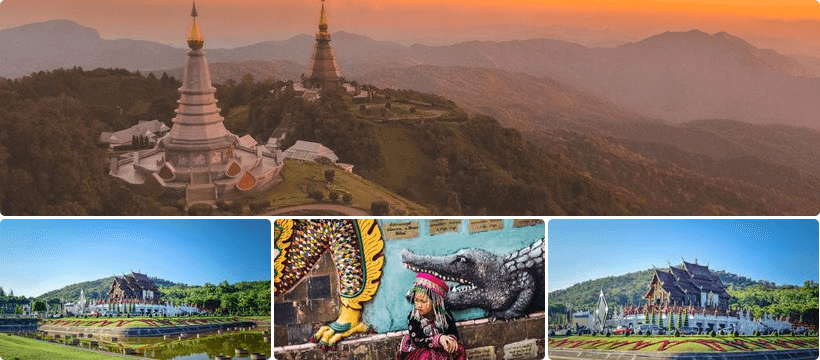
The 2,565-metre summit of Doi Inthanon, 90km southwest of Chiang Mai, is Thailand's highest point — significantly cooler than the city (often 10–15°C at the summit). The park contains two spectacular twin pagodas (Napamethanidol and Naphapholphumisiri, ฿50 each, built to honour the king and queen), a series of waterfalls (Wachirathan, Mae Ya), and some of the region's best birdwatching. The drive through montane cloud forest is as rewarding as the specific sites.
🚗 Organised day tour from Chiang Mai: ฿800–1,200 per person (includes transport, guide and lunch). Scooter rental for the road from Chiang Mai is not recommended — 180km round trip on mountain roads.
💡 National park entry: ฿300 per person + ฿30 per vehicle. Bring a warm layer — summit can be 12°C even in November. Start early: clouds typically close in by midday obscuring the summit views.
Return to City — Tha Phae Gate & Old City Evening
Return to Chiang Mai by early afternoon and spend the final evening around Tha Phae Gate — the eastern entrance to the Old City, flanked by a broad plaza that hosts occasional festivals and markets. The moat-side road at dusk, with the lit temple spires visible over the walls, is one of Chiang Mai's most atmospheric settings. The area around the gate has good options for a final dinner, from ฿80 noodle stalls to mid-range restaurants at ฿250–400 per person.
💡 The Old City road along the moat (Kamphaeng Din Road) is perfect for an evening walk. Rent a bicycle from the Old City (฿60–80/day) to cover the moat perimeter in 30 minutes.
Extension option — Chiang Rai (2 nights): Chiang Rai is 3 hours north by bus (฿170–250, hourly from Arcade Bus Terminal). The White Temple (Wat Rong Khun, ฿100) and Blue Temple (Wat Rong Suea Ten, free) are among Thailand's most visually striking contemporary religious buildings. Far fewer visitors than Chiang Mai and significantly more relaxed atmosphere.
3. Getting Around Chiang Mai
Chiang Mai has no public rail or subway system. Getting around means choosing between songthaews (shared red trucks), Grab, tuk-tuks, bicycle and scooter rental. The right choice depends heavily on distance and your confidence with Chiang Mai's traffic.
Songthaew (Red Truck)
The backbone of local transport in Chiang Mai — red pickup trucks operating as shared taxis on approximate routes. Hail one by waving from the roadside; agree on the fare before boarding. Within the Old City and to nearby areas: ฿30–50 per person. For longer trips to Nimman or the Night Bazaar from the Old City: ฿40–60. Songthaews are shared — expect to wait while the driver picks up additional passengers heading the same direction.
✅
Grab: Available and reliable in Chiang Mai — fixed price before booking, no negotiation, air-conditioned. City centre trips: ฿40–90. Airport to Old City: ฿80–130. Slightly more expensive than songthaew but significantly more convenient for solo or time-sensitive travel.
✅
Bicycle rental: ฿60–80/day from Old City guesthouses and shops. Excellent for exploring the Old City moat area and nearby temples. The moat road is flat, relatively traffic-free and entirely cycleable. Not recommended beyond the Old City — main roads lack dedicated cycling infrastructure.
⚠️
Scooter rental: ฿150–250/day. Useful for day trips to Doi Suthep and surrounding villages. International Driving Permit (motorcycle) required. Traffic is significantly calmer than Bangkok but still requires experience and caution — tourist scooter accidents are common. Always inspect the scooter for pre-existing damage and photograph it before renting.
⚠️
Tuk-tuks: More expensive than songthaews for equivalent journeys and primarily serve tourist areas. Always agree on price before boarding. Use for short novelty trips rather than primary transport.
✅
Airport transfer: Chiang Mai International Airport (CNX) is 5km from the Old City. Grab costs ฿80–130; official airport taxi ฿150 (fixed rate counter at arrivals). Songthaew to the Old City: ฿50–60 per person (negotiate, shared).
"
Staying inside the Old City moat meant I walked almost everywhere for three days. The temples are genuinely stacked — you can do five in an afternoon just by walking the main roads. Grab handled everything outside the moat. I never needed a scooter or tuk-tuk once.
— Google Maps user D.Hoffman_Berlin, Chiang Mai transport review (verified, December 2025)
4. Practical Info: Money, SIM & Safety
Money & Payments
💵
Chiang Mai is predominantly cash-based outside mid-range hotels and international restaurants. Street food, temples, markets, songthaews and smaller guesthouses require cash. Always carry ฿300–500.
🏧
ATMs: Bangkok Bank, Kasikorn Bank and SCB ATMs widely available throughout the Old City and Nimman. Foreign card fee: ฿220 per withdrawal — withdraw larger amounts less frequently. Kasikorn Bank (KBank) has the most reliable network for international cards.
💱
Currency exchange: SuperRich (orange logo) has a branch near Tha Phae Gate offering competitive rates — significantly better than hotel exchange desks. Compare the displayed rate before transacting.
💰
Cost reality check: Chiang Mai is one of Southeast Asia's best-value destinations. A filling street meal costs ฿40–80. A guesthouse room in the Old City from ฿300–500/night. Expect to spend ฿800–1,500/day total (accommodation, food, local transport) at the budget end.
SIM Cards
📶
AIS, DTAC or True Move: All available at Chiang Mai Airport arrivals and at 7-Eleven stores throughout the city. AIS has the strongest coverage in the mountains and national park areas — important if you plan day trips to Doi Inthanon or Doi Suthep. 15GB for 7 days from ฿299; 30-day unlimited from ฿599.
📶
Registration: Tourist SIMs require passport. Buy at the airport arrivals counter to avoid queuing — the airport AIS, DTAC and True counters are open for all incoming flights.
Safety
Chiang Mai is very safe for tourists. Petty theft (bag snatching, pickpocketing at busy markets) is the primary risk — use a cross-body bag and keep phones in pockets at the Night Bazaar and Walking Streets. The main practical hazard is traffic — the Old City roads are busy and pedestrian infrastructure is limited.
🌫️
Smoke season (Haze): Between late February and mid-April, agricultural burning in the surrounding mountains creates serious air quality issues — PM2.5 levels can reach hazardous levels. Anyone with respiratory conditions should avoid visiting during this period. Check the Air4Thai app for daily AQI readings before outdoor activities.
🌡️
Heat: March–May can exceed 38°C in the city. Schedule outdoor activities before 10:00 and after 16:00. The Old City has fewer shaded streets than Bangkok — carry water and sun protection.
🏥
Medical: Chiang Mai Ram Hospital and Rajavej Chiang Mai Hospital are internationally accredited with English-speaking staff. Both are within 10 minutes of the Old City by Grab.
5. Best Time to Visit Chiang Mai
Chiang Mai's seasons are more distinct than Bangkok's — the northern location and surrounding mountains give it a genuinely cool season (November–February) that makes it one of the most comfortable cities in Thailand to visit. Based on Tourism Authority of Thailand data and seasonal review patterns:
| Season |
Months |
Weather |
Highlights |
Verdict |
| ❄️ Cool Season |
Nov – Feb |
15–28°C, dry, clear skies |
Loi Krathong (Nov), Yi Peng lantern festival |
Best Overall |
| 🌡️ Hot Season |
Mar – May |
28–38°C, hazy (Mar–Apr) |
Songkran water festival (Apr 13–15) |
Avoid Mar–Apr for haze; Songkran only in mid-Apr |
| 🌧️ Rainy Season |
Jun – Oct |
22–32°C, afternoon rain |
Lush greenery, waterfalls at peak flow |
Best Value |
| 🏮 Yi Peng Festival |
Nov (full moon) |
18–26°C |
Thousands of lanterns released into night sky |
Most Spectacular |
Yi Peng Lantern Festival booking note: The mass lantern release at Maejo University (official ceremony) and the smaller Old City release sell out months in advance and require pre-purchased tickets. During the Yi Peng full moon period, hotel prices in the Old City increase 2–4x and availability disappears 3–4 months out. Book flights and accommodation before tickets go on sale if this is your target date.
Frequently Asked Questions
How much does a taxi or songthaew cost from Chiang Mai Airport to the Old City?
The Old City is only 4 km from the airport. An official airport taxi costs a fixed 150 THB (US$4.20), 10–15 minutes. Grab or Bolt costs 60–150 THB. The cheapest option is a shared red songthaew at 30–40 THB per person — find the lineup of red pickup trucks outside arrivals, tell the driver your destination, and confirm the fare before getting in. If the driver quotes 100–200 THB, that is a private charter. The RTC Smart Bus R3 costs 30 THB flat but takes 35–50 minutes.
When is burning season in Chiang Mai and should I avoid it?
Burning season runs from late January through mid-April, with March being the worst month. AQI levels routinely exceed 200 (hazardous), and Chiang Mai has been ranked the world’s most polluted city multiple times. In 2026 the province was declared an emergency disaster zone. Visit between November and early January for clear skies, or from late May onward when rains clear the air. If visiting during burning season, monitor IQAir daily, wear an N95 mask outdoors, and book accommodation with good air filtration.
How many days do you need in Chiang Mai?
Three full days is the sweet spot. Day 1: Old City temples — Wat Phra Singh, Wat Chedi Luang. Day 2: Doi Suthep at sunrise (40 THB songthaew from the zoo), then Nimmanhaemin Road for cafes. Day 3: an ethical elephant sanctuary or a Thai cooking class (800–1,200 THB). With 2 days you can cover the essentials; with 5+ you can add Doi Inthanon National Park, sticky waterfalls (Bua Thong), and a day trip to Chiang Rai. See our
Chiang Mai 3-Day Itinerary for a full trip plan.
How do I get around Chiang Mai without a scooter?
The red songthaew is your best friend — flag one down, tell the driver your destination, and pay 30–40 THB. Grab and Bolt are widely available (60–150 THB). Tuk-tuks cost 80–150 THB — negotiate before getting in. Bicycles (50–100 THB/day) work well within the flat, walkable Old City. Scooters rent for 200–300 THB/day but require an International Driving Permit with motorcycle endorsement and travel insurance that covers motorbike accidents.
Cash or card — how should I pay in Chiang Mai?
Cash is essential for street food (30–60 THB per dish), markets, songthaews, tuk-tuks, and temple donations. Cards are accepted at hotels, malls, chain restaurants, and 7-Eleven (200 THB minimum spend). Carry 500–1,000 THB (US$14–28) per day, mostly in 20, 50, and 100 THB notes — songthaew drivers rarely have change for 1,000 THB notes. ATMs are everywhere but charge a 220 THB fee per withdrawal; withdraw larger amounts to minimise fees. Grab and Bolt accept international credit cards.