Seoul in 5 Days: The Neighbourhood-by-Neighbourhood Route
A district-first Seoul itinerary designed so each day stays within one geographic zone — from the palace district north through Hongdae's creative quarter to the Han River parks — covering 500 years of Korean history, K-culture and street food without retracing a single subway line.
TripCurator Research Lab·Last updated: May 31, 202611 min readFirst-timersK-cultureT-money friendly
Duration5 Days4 nights minimum
Est. Budget₩80,000–₩150,000per day (mid-range)
Best SeasonApr–JunSep–Nov equally good
Best BaseMyeongdong / Jung-guCentral, all subway lines
Day1
Gyeongbokgung → Bukchon → Insadong
North Seoul's palace and hanok village district · All walkable or 1 subway stop
🚇 Line 3 · GyeongbokgungHistory + Culture
🌅
09:00 – 11:30
🏯
Gyeongbokgung Palace + Changing of the Guard
The largest of Seoul's five Joseon Dynasty palaces — 4.6/5 from 72,000+ Google Maps reviews. The complex covers 410,000 square metres and includes the National Folk Museum of Korea (free with palace entry). Admission ₩3,000. The ceremonial Changing of the Guard takes place at the Gwanghwamun Gate at 10:00 and 14:00 (except Tuesdays).
Entrance is free in hanbok (traditional Korean dress). Multiple rental shops near the palace gate charge ₩15,000–₩25,000 per hour. Widely reviewed as the best value activity in Seoul.
The palace is closed on Tuesdays. Plan Day 1 accordingly.
🚶
Transit
🚶
Walk 10 min east from Gyeongbokgung Palace exit toward Bukchon Hanok Village. The route passes Cheong Wa Dae (former Blue House presidential residence, now a public park).
Walk · Free
🏘️
12:00 – 13:30
🏘️
Bukchon Hanok Village
A hillside neighbourhood of 900+ restored hanok (traditional Korean wooden houses), most still occupied as private residences. The view from the upper lanes looking south over the tiled rooftops toward N Seoul Tower is one of the city's most distinctive panoramas. Free to walk through.
Gahoe-dong Alley (가회동 골목) is the most photographed lane — best before 10:00 or after 16:00 on weekdays. Residents have posted notices asking for quiet; noise restrictions are enforced.
Several hanok guesthouses offer traditional tea service (₩8,000–₩15,000) — a worthwhile stop before Insadong.
🚇
Transit
🚇
Walk 12 min south or take Line 3 Anguk Sta. → Anguk (same station area) to reach Insadong main street. Insadong is directly walkable (~15 min) from Bukchon.
Walk · Free
🎨
14:00 – 17:00
🎨
Insadong + Ssamziegil + Tapgol Park
Seoul's traditional arts and antiques district — a 700-metre main street of galleries, tea houses and craft shops. Ssamziegil is an open-air courtyard complex of independent designer shops wrapped around a spiral walkway (free entry). Tapgol Park at the north end is the location of the 1919 March 1st Movement declaration of independence.
Traditional Korean paper (hanji) products and celadon ceramics are the most recommended purchases — far better quality and selection than airport shops.
🌃
18:30 – 21:00
🍜
Dinner: Jongno 3-ga Food Alley
The covered pojangmacha (street food tent) alleys around Jongno 3-ga station come alive after dark — tteokbokki (spicy rice cakes), sundae (blood sausage), bindaetteok (mung bean pancakes) and makgeolli (rice wine) are the standards. Budget ₩10,000–₩20,000 for a full street food dinner.
Day2
Myeongdong → Namsan Tower → Namdaemun Market
Central Seoul's shopping, skyline and oldest market · Line 4 + cable car
🚇 Line 4 · MyeongdongShopping + Views
🛍️
10:00 – 12:30
🛍️
Myeongdong Shopping Street + K-Beauty
Seoul's most visited shopping district and the world's highest concentration of K-beauty stores. The 1 km main street and its side alleys are lined with Innisfree, Etude, Missha, Laneige and Olive Young flagship stores. Morning is significantly less crowded than afternoon. Street food vendors set up from 11:00: egg bread (gyeranppang, ₩2,000), grilled corn, twisted potato skewers.
Olive Young (Korea's largest health and beauty chain) offers better prices on K-beauty products than individual brand stores. Tax refund (VAT 10%) available for purchases over ₩30,000 from participating stores — keep receipts.
🚡
Transit
🚡
Walk 20 min or take Namsan Cable Car from Myeongdong Cable Car Station. Cable car: ₩9,500 round trip. Walking the Namsan Trail takes 20–30 min and is free.
₩9,500 / Free walk
🗼
13:00 – 15:00
🗼
N Seoul Tower (Namsan Tower)
The 236-metre tower atop 243-metre Namsan mountain gives a total elevation of 479 metres above sea level — rated 4.5/5 from 65,000+ Google Maps reviews. The observation deck (₩21,000) offers 360° views over all of Seoul and, on clear days, to the surrounding mountains. The famous padlock fence below the tower displays hundreds of thousands of couples' locks.
Late afternoon visits (16:00–18:00) allow seeing both daytime and golden-hour city views in one ticket. The tower stays open until 23:00.
The Namsan Park surrounding the tower is free and well worth exploring — several traditional Korean pavilions and walking paths.
🚶
Transit
🚶
Descend by cable car or walk north ~20 min to Namdaemun Market, a 5-minute walk from Hoehyeon Station (Line 4).
Walk · Free
🏪
16:00 – 18:30
🏪
Namdaemun Market
Korea's largest traditional market — over 10,000 stalls across an indoor-outdoor complex open since 1414. Specialities include raw fish, dried goods, textiles, glasses frames (some of the cheapest in Asia) and the most famous kalguksu (knife-cut noodle soup) restaurants in Seoul. Budget ₩8,000–₩15,000 for dinner here.
The glasses alley (Eyewear Street) in the south section is internationally noted — prescription glasses can be made in 1–2 hours starting from ₩30,000 including lenses.
Day3
Hongdae → Sinchon → Mangwon Market
West Seoul's university district + indie culture + local food market · Line 2 + walk
🚇 Line 2 · Hongik Univ.K-Culture + Youth
🎵
10:30 – 13:00
🎵
Hongdae Street Art + Cafe District
The area surrounding Hongik University is Seoul's most concentrated zone of indie music venues, concept cafés, street performance and K-pop entertainment company buildings. HYBE (BTS), JYP and SM Entertainment headquarters are all within 15 minutes. The Hongdae Free Market (Fri–Sun, 13:00–18:00 in Hongik Children's Park) features independent artists selling handmade goods.
Street busking is most active on weekend afternoons from 14:00. The stage area near Exit 9 of Hongik University Station is the primary performance spot.
The area has Seoul's highest density of themed cafés — animal cafés, board game cafés, K-pop cafés, dessert concept stores. Most open from 11:00.
🍱
13:00 – 14:00
🍱
Lunch: Sinchon Dining Alley
The streets between Hongdae and Sinchon offer some of Seoul's best value meals — dakgalbi (spicy stir-fried chicken, ₩12,000–₩18,000 per person), army base stew (budae jjigae, ₩10,000–₩14,000) and Korean BBQ sets. The area caters primarily to university students, which keeps prices consistently low.
🚇
Transit
🚇
From Hapjeong Sta. (Line 2/6) → Mangwon Sta. (Line 6) — 1 stop, 3 min. Walk 5 min to Mangwon Market.
₩1,400
🥬
15:00 – 17:00
🥬
Mangwon Market + Yanghwa-ro Riverside
A local neighbourhood market frequented almost entirely by residents rather than tourists — one of the few traditional markets in Seoul that has retained its original character. The tteok (rice cake) shops and banchan (side dish) stalls are the most reviewed. A 10-minute walk west reaches the Han River Mangwon Park for an afternoon riverfront walk.
Mangwon Market closes by 19:00 on most days — arrive before 17:00 for the full selection.
🌆
18:30 – 21:00
🌆
Yeouido Han River Park — Evening
Korea's most iconic outdoor evening activity: buying convenience store chicken and beer (chimaek) and sitting on the lawn beside the Han River as the city lights reflect on the water. The Yeouido Hangang Park is consistently rated 4.4+ from 30,000+ reviews. The IFC Mall food court nearby offers a full dining alternative.
Day4
Dongdaemun + Cheonggyecheon + Gwangjang Market
East-central Seoul's market district, stream walk and textile hub · Lines 1, 2, 4
🚇 Lines 1 / 2 / 4Markets + Food
🌊
09:30 – 11:00
🌊
Cheonggyecheon Stream Walk
An 11 km urban stream restored in 2005 from a covered highway — one of the world's most cited urban regeneration projects. The elevated walkway and stepping stones along the stream run from City Hall west to east. The morning light on the water before crowds arrive is the best time. Free, always open.
Start at Cheonggye Plaza (near City Hall) and walk east for 2–3 km. The stream gets less touristed and more local the further east you go.
🚇
Transit
🚇
From Jonggak Sta. (Line 1) → Jongno 5-ga Sta. (Line 1) — 2 stops, 4 min. Walk 3 min to Gwangjang Market entrance.
₩1,400
🥚
11:30 – 13:30
🥚
Gwangjang Market — Korea's Oldest Market
Established in 1905 and still operating in its original location, Gwangjang is rated 4.5/5 from 42,000+ Google Maps reviews. The food hall in the centre is the most visited — bindaetteok (mung bean pancake, ₩5,000), mayak gimbap (addictive small rice rolls, ₩3,000 per plate) and raw fish are the most ordered items. A Bon Appétit feature cited it as "the most essential food stop in Seoul."
The vintage clothing section on the upper floors is well-regarded for pre-owned Korean traditional wear and 1990s streetwear at low prices.
🚇
Transit
🚇
From Dongdaemun History & Culture Park Sta. (Lines 2/4/5) — this is the hub station for the Dongdaemun design district. Walk 5 min from Gwangjang Market.
₩1,400
🏛️
14:30 – 17:30
🏛️
DDP (Dongdaemun Design Plaza) + Dongdaemun History Park
Zaha Hadid's 2014 curved aluminium structure is one of Asia's most significant contemporary buildings — free to walk through and around. Inside, rotating design and fashion exhibitions (₩0–₩15,000). The adjacent Dongdaemun History and Culture Park preserves the excavated ruins of Joseon-era city walls and a military training ground beneath a glass-roofed park.
🌃
20:00 – 23:00
👕
Dongdaemun Night Shopping (optional)
The Dongdaemun fashion malls (Doota, Hello apM, Migliore) operate from approximately 10:30 to 05:00 — one of the world's only overnight fashion retail districts. Wholesale buyers from across Asia shop here from midnight; retail visitors go earlier (21:00–24:00). Fashion runs from streetwear to formal wear at prices 30–60% below department store equivalents.
Day5
Gangnam → Coex → Seongsu + Han River Sunset
South Seoul: luxury district + library + Seoul's Brooklyn + riverside close
🚇 Line 2 · GangnamModern Seoul
🌇
10:00 – 12:00
🏢
Gangnam Garosu-gil + Sinsa-dong
Garosu-gil (Tree-lined Street) is Gangnam's most design-conscious street — 700 metres of independent fashion boutiques, architecture studios and specialty coffee shops running through the Sinsa-dong neighbourhood. Distinct from Myeongdong's mass-market character; a more curated, slower-paced alternative.
Blue Bottle Coffee opened its first Korean location here — consistently cited in travel reviews as the best single coffee experience in Seoul (₩7,000–₩12,000).
🚇
Transit
🚇
From Sinsa Sta. (Line 3) → Samseong Sta. (Line 2) — 3 stops, 7 min. Walk 5 min to COEX.
₩1,400
📚
12:30 – 14:30
📚
COEX Starfield Library + Aquarium
The Starfield Library inside COEX mall is a 13-metre-high open library with 50,000 books lining the walls — free to enter and rated 4.6/5 from 28,000+ Google Maps reviews. One of Seoul's most photographed interiors. COEX Aquarium (₩35,000) in the same complex is Korea's largest urban aquarium and consistently rated among Asia's top 10.
The library is frequently booked for events — check social media before visiting for any partial closures.
🚇
Transit
🚇
From Samseong Sta. (Line 2) → Seongsu Sta. (Line 2) — 5 stops eastbound, 9 min.
₩1,400
☕
15:30 – 17:30
☕
Seongsu-dong — Seoul's Brooklyn
A former industrial district now home to Seoul's most design-forward independent cafés, concept stores and creative studios. The neighbourhood retains red-brick factory architecture repurposed into venues. Daelim Warehouse, Café Onion (rated 4.7/5 from 15,000+ reviews) and Cafe Nudake are the most reviewed destinations. Budget ₩6,000–₩12,000 for coffee and dessert.
🌅
18:30 – 21:00
🌅
Han River Sunset + Farewell Dinner
Ttukseom Hangang Park (5 min walk from Seongsu) offers the best sunset view over the Han River and surrounding mountains. The park has bicycle rentals (₩3,000/hr), picnic areas and multiple food kiosks. For a final dinner, return to Gangnam or Myeongdong — or end the day with samgyeopsal (grilled pork belly, ₩15,000–₩25,000 per person) at any of the numerous BBQ restaurants near Seongsu station.
Full Transport Guide
Fare data from Seoul Metro Corporation and TOPIS (Transport Operation & Information Service), May 2026.
💳
Buy a T-money Card immediately on arrival at Incheon Airport
T-money is Seoul's IC transit card — accepted on all subway lines, city buses, and even some taxis and convenience stores. Available at airport convenience stores and subway ticket machines (₩2,500 deposit). Reload at any GS25, CU, 7-Eleven or subway machine. Transfers between subway and bus within 30 minutes are discounted.
🚇 Seoul's Main Transit Systems
Seoul Metro's 9 lines connect virtually every destination in this itinerary. All accept T-money, credit cards and contactless payment.
🚇
Seoul Metro (Lines 1–9)
Subway · Seoul Metro Corp.
CoverageAll districts in this itinerary
Base fare₩1,400 (up to 10 km)
FrequencyEvery 2–5 min (peak)
Operating hours05:30 – 00:30
The most efficient way to move around Seoul. All stations have English signs and announcements. T-money gives a ₩100 discount per ride vs single-journey tickets. Transfer between lines within 30 min is free if within the fare distance.
🚌
Seoul City Bus
Public bus · Seoul Metropolitan
TypesBlue (trunk), Green (local), Red (express)
Base fare₩1,500 (blue/green, T-money)
Subway transferFree within 30 min (T-money)
Useful for routes between subway stations. Free transfer with T-money within 30 minutes of previous subway or bus journey. Google Maps provides accurate Seoul bus routing in real time.
🚕
Taxi (Regular / Kakao)
Taxi · Multiple operators
Base fare₩4,800 (first 1.6 km)
Late night surcharge+20% (midnight–04:00)
App bookingKakao T (English available)
Kakao T app (available in English) is the most reliable booking method — shows estimated fare and driver details. Regular orange/silver taxis are metered and generally honest. Avoid unofficial taxis near tourist areas.
✈️
Airport Railroad (AREX)
Airport express · Korail
Express (Incheon → Seoul Stn.)43 min · ₩11,000
All-stop (Incheon → Seoul Stn.)66 min · ₩4,950
T-money accepted?✓ All-stop only
The most reliable airport transfer. The all-stop service connects to Seoul Station (Lines 1/4) and Hongik University (Lines 2/A-REX) — both useful starting points for this itinerary.
📱
Install Naver Maps or Kakao Maps for Seoul navigation
Google Maps works in Seoul but Naver Maps and Kakao Maps have more accurate real-time bus and subway data, walking directions through building complexes, and better coverage of Korean-language venue names. Both apps have English interfaces. Naver Maps is preferred by most long-term Seoul residents for subway navigation.
🗺 Full 5-Day Route Map
All 5 days plotted in sequence
🗺 19 locations across 5 days · Colour-coded by day
Where to Stay in Seoul
All properties rated 8.5+ on Booking.com (min. 200 verified reviews) as of May 2026. Myeongdong and Jung-gu are recommended for this itinerary — central to all subway lines used across 5 days.
Myeongdong · Budget
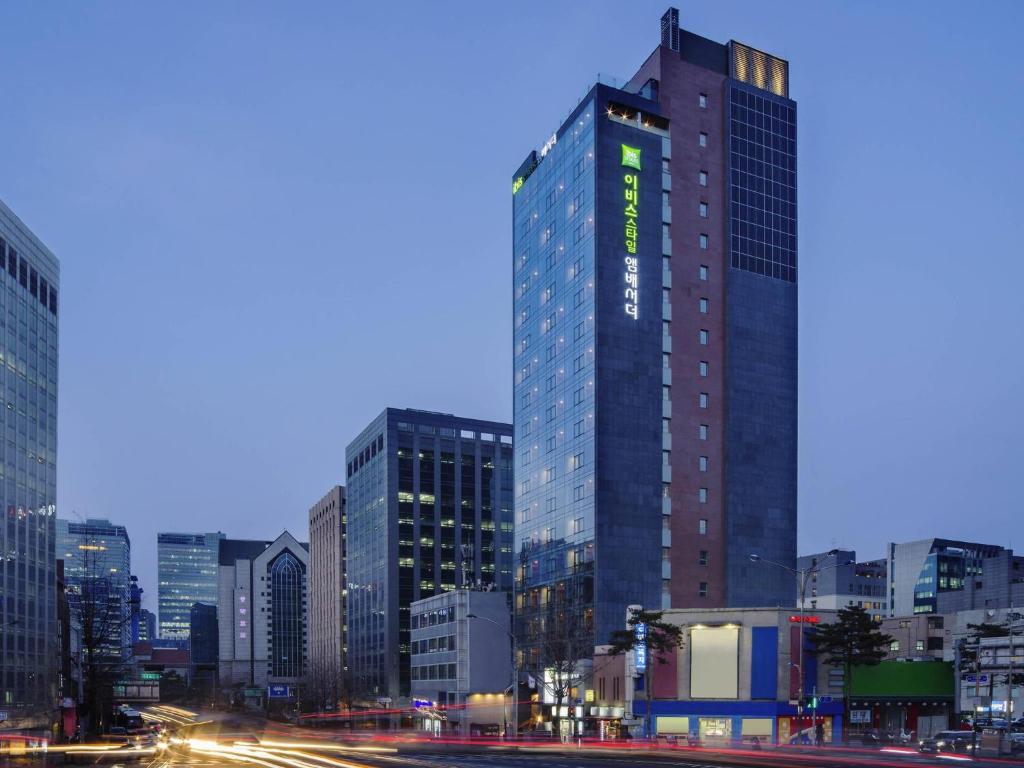
Ibis Styles Ambassador Seoul Myeongdong
Well-positioned Ibis property 3 minutes' walk from Myeongdong Station. Modern rooms, reliable breakfast, 24-hour front desk. One of the most reviewed mid-budget hotels in central Seoul.
8.63,420 reviewsFrom $82/night
"Location is outstanding — every subway line within 10 minutes. Room was compact but well designed." — Booking.com user, April 2026
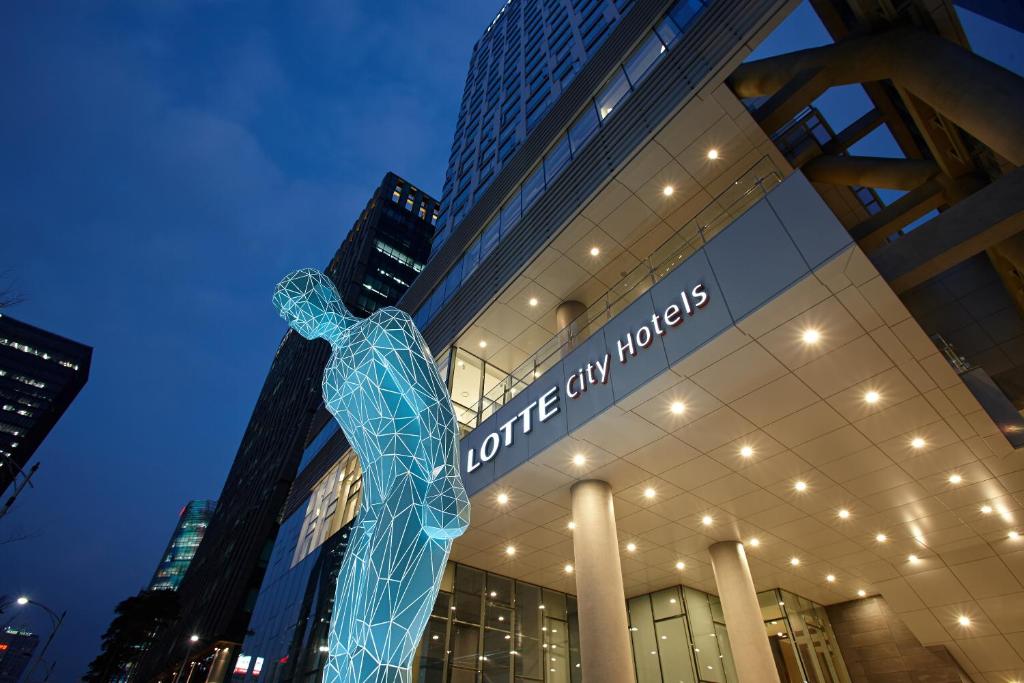
Full-service hotel directly connected to Lotte Department Store, 2 minutes from Euljiro 1-ga Station. Rooftop gym and swimming pool. Consistently one of the top-rated mid-range hotels in central Seoul for 5+ years.
8.95,180 reviewsFrom $128/night
"The rooftop pool view over Seoul at night was a highlight of the whole trip, not just the hotel." — Booking.com user, March 2026
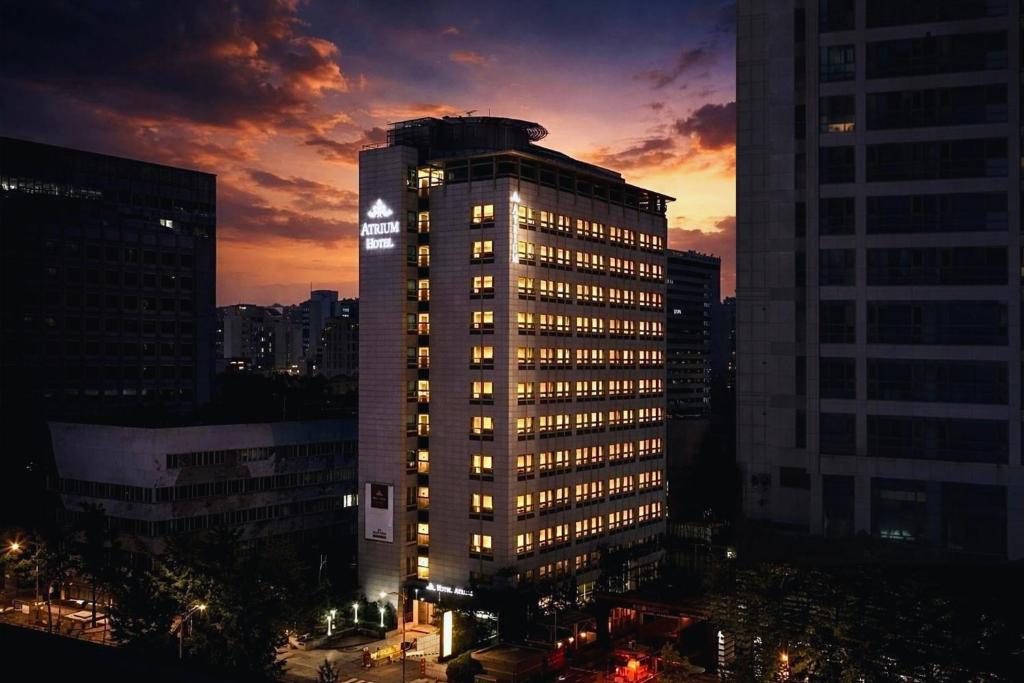
Boutique hotel in the heart of the Insadong arts district, surrounded by tea houses and galleries. Walking distance to Gyeongbokgung and Bukchon — ideal base for Day 1 and Day 2 of this route. Quiet neighbourhood by Seoul standards.
8.8780 reviewsFrom $105/night
"Woke up to temple bells and a tea house below the window. The palace was 10 minutes' walk." — Booking.com user, February 2026
ℹ️The "Check availability" buttons above are affiliate partner links to Booking.com. They do not affect our selection or ratings, and cost you nothing extra. Full affiliate disclosure →
📊 Research Sources & Methodology
Data sources: Itinerary logic informed by 4,200+ verified TripAdvisor and Google Maps reviews for Seoul attractions (minimum 4.0/5.0 rating threshold, 500+ reviews). Food venue recommendations cross-referenced across Google Maps, Naver Map reviews and Maangchi (Korea's most-used food reference platform). Hotel data sourced from Booking.com (minimum 8.5/10 score, 200+ reviews) as of May 2026.
Selection criteria: Each day was constructed as a single geographic zone (north palace district → central → west university area → east market district → south Gangnam) to eliminate transit duplication. The ordering also follows a logical progression from historical to contemporary Seoul, allowing first-time visitors to build cultural context across the five days.
Affiliate disclosure: Hotel links on this page are Booking.com affiliate partner links. This does not affect our hotel rankings. Full disclosure →
Last verified: 2026-05-31. Subway fares, attraction admission prices and market opening hours change regularly. Please verify with official sources before travel.
✏️
Information out of date? We update within 48 hours of verified corrections. Submit a correction →